
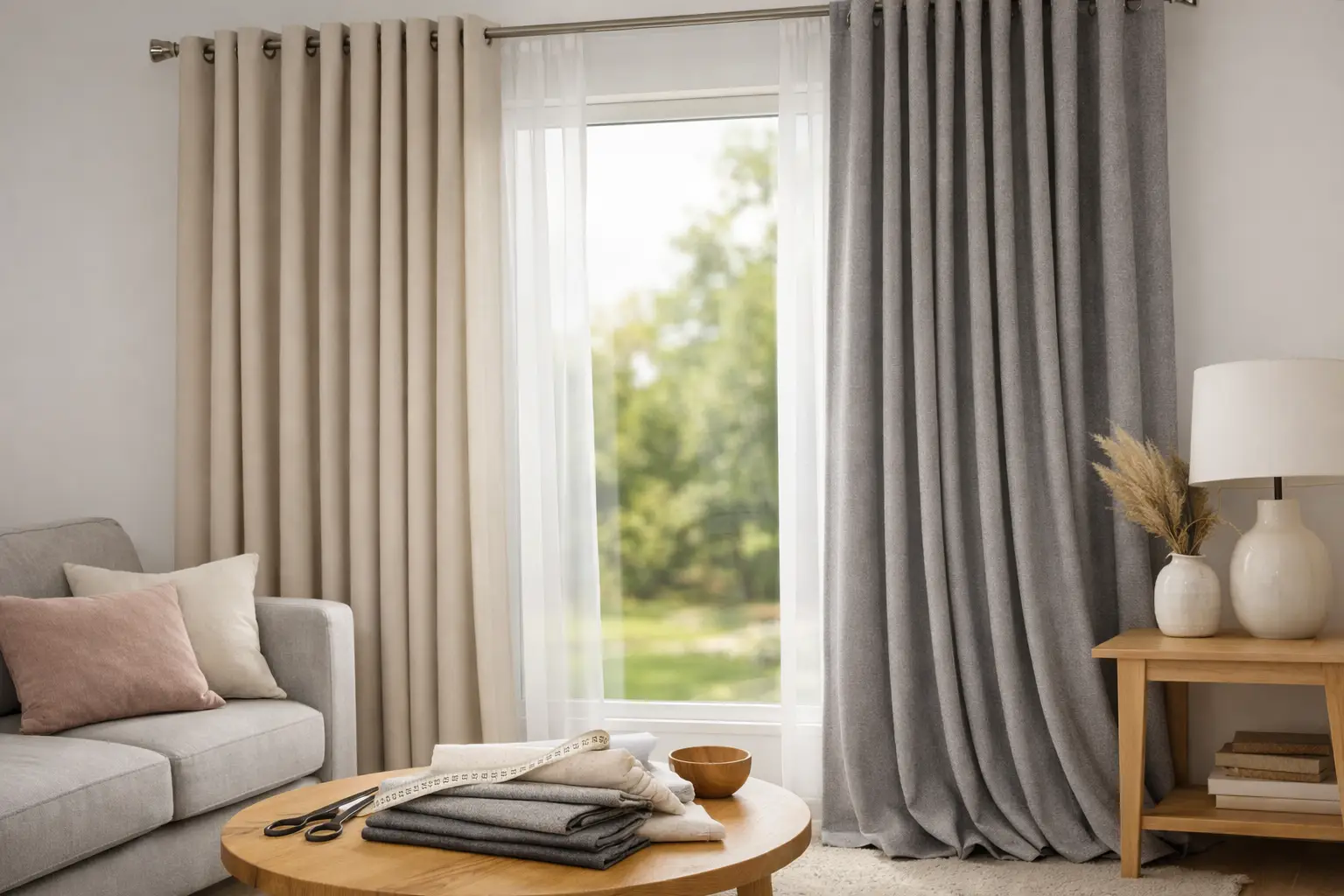
A pair of curtains can look lovely in a photograph and still be the wrong choice for your room. That is why finding the best value made to measure curtains is not simply about spending less. Real value comes from a curtain that suits the window properly, hangs beautifully, works with the room and keeps doing its job year after year.
For many homeowners, the cheapest option becomes the expensive one. Off-the-shelf curtains may seem appealing at first, but awkward lengths, poor fullness and limited fabric choice often leave a room looking unfinished. When curtains are made to measure, the result is more considered. The proportions are right, the finish is neater and the whole space feels more settled.
What best value made to measure curtains really means
Value is often mistaken for price alone. In practice, it is about what you receive for the money you spend. With made to measure curtains, that includes the quality of the fabric, the standard of making, the suitability of the lining, the accuracy of measuring and the skill of fitting.
A lower quote can look attractive until key details are stripped out. That might mean a simpler lining, fewer fabric options, less hand finishing or no help with measuring and installation. On the other hand, paying more does not automatically mean better value either. If a curtain is over-specified for the room, or chosen without proper advice, you may end up paying for features you do not really need.
The best choice usually sits in the middle ground. It is carefully made, properly measured and suited to the way you live. It also reflects the style of your home rather than forcing you to compromise around standard sizes.
Why made to measure often works out better than ready-made
The difference is easiest to see in the finished look. Ready-made curtains are produced in standard drops and widths, so they rarely fit a window exactly. You may have to accept curtains that stop short, puddle too heavily or never quite draw neatly. In bay windows, wider openings or older properties with uneven walls, the problem is even more obvious.
Made to measure curtains are built around the window and the room. That means the heading, stack back, fullness and drop can all be planned properly. The fabric sits as it should, the curtain opens and closes more smoothly and the overall effect feels intentional.
There are practical advantages too. A better fit can improve privacy, reduce draughts and help with light control. In bedrooms and sitting rooms especially, those details matter every day. Value is not just what you see when guests visit. It is also the comfort and ease you notice each morning and evening.
Where the value actually comes from
The fabric is a large part of the cost, but it is not the whole story. A well-made curtain depends on several elements working together.
Good quality linings can protect the face fabric, improve the drape and add body. Interlining, while not necessary for every room, can give curtains a fuller, more luxurious look and extra insulation. In a draughty period property, that may be money well spent. In a smaller room with a lighter decorative scheme, a standard lining may be the better-value option.
The heading style also affects both cost and appearance. Pencil pleat can be a sensible, versatile choice. Wave headings create a cleaner, more contemporary line. Pinch pleat often gives a tailored finish that suits classic interiors particularly well. The right option depends on the room, the track or pole and the look you want to achieve.
Then there is the making itself. Hand-finished details, pattern matching and carefully weighted hems all contribute to how curtains hang. These are not extravagant extras. They are the reason a curtain looks polished rather than merely adequate.
How to judge the best value made to measure curtains
Start by asking what you need the curtains to do. In a bedroom, blocking early light and adding warmth may be the priority. In a dining room, elegance and softness might matter more. In a family room, durability and ease of care may sit higher on the list.
Once that is clear, consider whether the quote includes a complete service or only the product. Measuring is one of the most important stages. A curtain can be beautifully made and still disappoint if the sizes are wrong. Professional measuring removes much of that risk, particularly with bays, tall windows or awkward spaces.
Fitting is just as important. Tracks and poles need to be installed correctly, at the right height and width, to give curtains the best possible fall. If fitting is left to chance, even an excellent curtain may not show at its best.
It is also worth looking at the breadth of fabric choice. Better value does not mean choosing from a narrow range of safe options. It means finding a fabric that is right for your room, your light levels and your lifestyle. A wider collection gives more scope to achieve that balance.
The hidden cost of getting it wrong
Curtains are one of the largest visual elements in a room. If they are wrong, the entire scheme can feel unsettled. A fabric that looked appealing in isolation may become too heavy once it covers a large window. A pale shade may wash out in strong sunlight. A cheaper make-up may lose its shape sooner than expected.
Replacing disappointing curtains is rarely good value. Neither is living with something that irritates you every day because it does not hang properly or finish at the right point. This is where expert guidance becomes especially valuable. It helps you avoid costly mistakes before fabric is cut and made.
An experienced interiors specialist will usually spot things a homeowner may not. That could be the need for extra return on the pole, a better lining for the room orientation or a fabric scale that works more successfully with the size of the window. Those decisions have a direct effect on the finished result.
Why service matters as much as the curtain itself
For many people, made to measure is not just about the product. It is about peace of mind. Choosing fabric at home, seeing samples in your own light and having someone manage the measuring and fitting can make the whole process far more straightforward.
This is often where true value lies. Instead of trying to interpret measurements, compare fabrics on a screen and arrange fitting separately, you receive a joined-up service. That tends to save time, reduce stress and lead to a better outcome.
A family-run specialist with a strong local reputation will often place more emphasis on care and finish than a larger volume seller. That matters because curtains are not an impulse purchase. They are part of your home for years, and they need to feel right each time you walk into the room.
At Country Interiors, for example, the focus is on that complete process – from advice and fabric selection through to measuring, hand-finished making and professional installation. For homeowners who want confidence as well as a beautiful result, that level of support is often where best value is found.
Choosing value for your home, not somebody else’s
A formal sitting room, a busy kitchen diner and a guest bedroom will not all need the same answer. The best value made to measure curtains for one home may not be the best choice for another. A statement fabric can be worth the investment in a room where you spend most of your time, while a simpler cloth may be perfectly suitable elsewhere.
What matters is choosing with purpose. Think about use, light, warmth, privacy and the style of the room as a whole. Ask what is included, how the curtains will be measured and fitted, and whether the finish will stand the test of time.
When curtains are made with care and chosen well, they do more than cover a window. They soften the room, frame the view and make the house feel more complete. That is usually the point where value becomes clear – not in the initial figure alone, but in how well the finished curtains live in your home for years to come.