
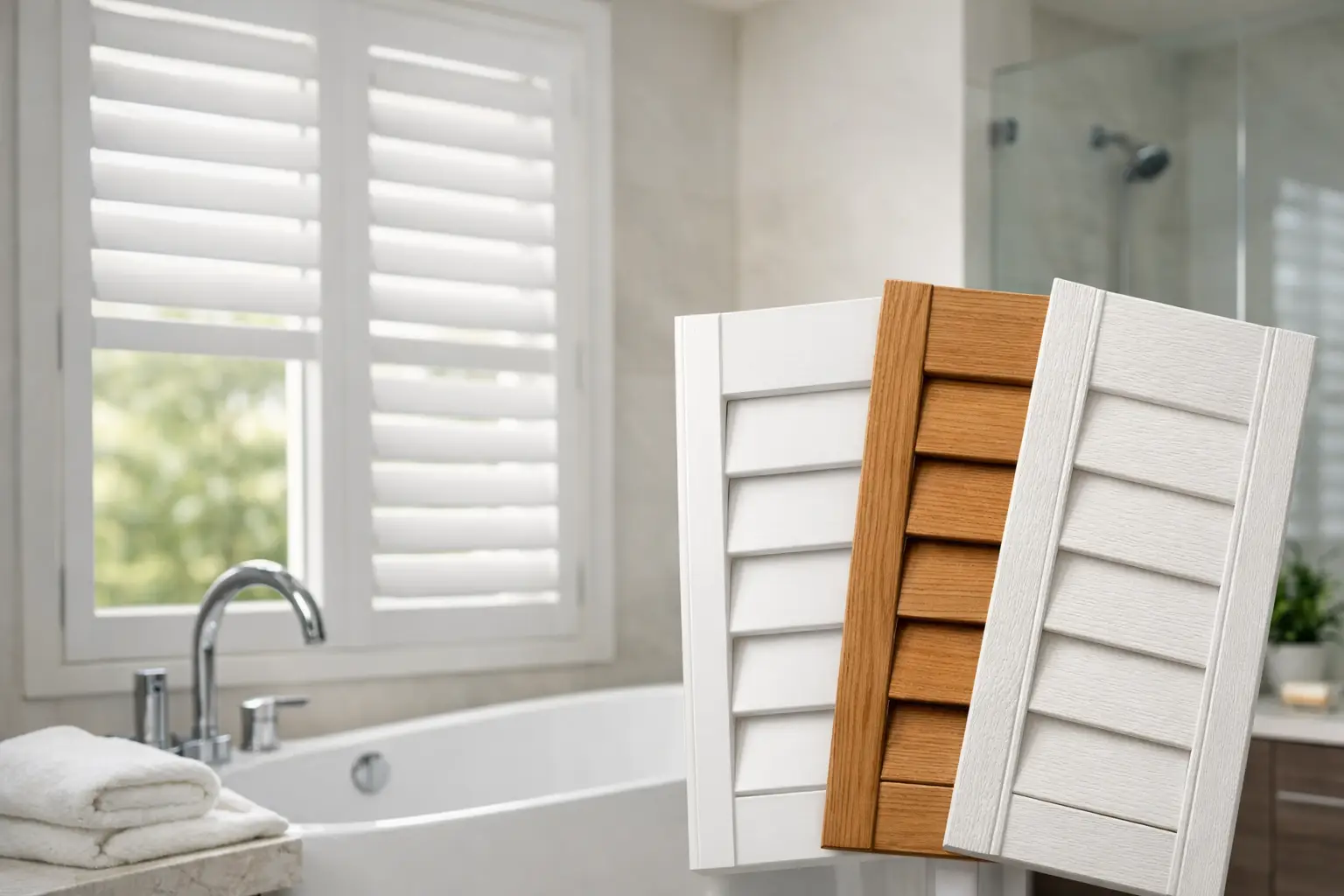
A bathroom window has to work harder than most. It needs to protect privacy without blocking daylight, stand up to steam and splashes, and still look considered alongside your tiles, brassware and paintwork. The best shutters for bathrooms do all three, provided the material and design are chosen for the room rather than simply for the look.
Shutters are a particularly practical choice for bathrooms because their adjustable louvres allow you to welcome in natural light while keeping the room comfortably private. They also create a clean, tailored finish that suits everything from a classic family bathroom to a crisp, contemporary en suite. The detail that matters most is not the colour or louvre size, however. It is how well the shutter material copes with moisture.
What makes a shutter suitable for a bathroom?
Bathrooms experience changes in humidity that living rooms and bedrooms do not. A hot shower can quickly fill a small room with steam, while baths, wet towels and limited ventilation can keep moisture in the air long afterwards. Natural wood may be beautiful, but it can expand, contract or warp when exposed to repeated damp conditions.
For this reason, the most dependable bathroom shutters are usually made from waterproof or highly water-resistant materials. These are designed to retain their shape and finish around condensation, making them well suited to windows near a shower, bath or basin.
That does not mean every bathroom needs the same solution. A large, well-ventilated bathroom with a window set well away from water may allow more choice than a compact en suite with an electric shower. A careful assessment of the window position, ventilation and daily use will lead to a shutter that continues to look good years after fitting.
Best shutters for bathrooms by material
Waterproof ABS shutters
For bathrooms where moisture is a constant concern, waterproof ABS shutters are often the strongest choice. ABS is a durable engineered material that is made to resist water, humidity and everyday wear. It will not swell or warp like untreated timber, and its smooth surface is straightforward to wipe clean.
This makes ABS particularly suitable for shower rooms, busy family bathrooms and windows positioned close to a bath or basin. It is also a sensible option in homes where the bathroom is used frequently and ventilation is less than perfect.
Quality matters here. Well-made waterproof shutters should feel solid, operate smoothly and have a neat finish around the hinges, panels and frame. A made-to-measure installation is equally important, especially where walls, tiles or window reveals are not perfectly square.
PVC shutters
PVC shutters are another practical moisture-resistant option. They are generally easy to maintain and can be a cost-conscious way to achieve the shutter look in a bathroom. Their non-porous surface is well suited to humid spaces, and they are available in a range of clean, neutral finishes.
The trade-off is often in weight and appearance. Some PVC designs can feel heavier than timber-style alternatives, particularly on wider windows, and the finish may not have quite the same furniture-like character. For a straightforward bathroom window, though, a well-specified PVC shutter can be a hardworking and attractive choice.
Faux wood shutters
Faux wood shutters can offer the warmth of painted timber with improved resistance to damp conditions. However, the term covers several different constructions, so it is worth checking exactly what the shutters are made from and whether the manufacturer recommends them for bathrooms.
Some faux wood products contain composite cores that may not be suitable for areas with direct, regular moisture. Others are specifically designed for wet rooms. This is where professional advice is valuable: a shutter that is suitable for a cloakroom with good extraction may not be the right choice beside a daily-used shower.
Wooden shutters
Wooden shutters have a lovely natural quality and are often chosen for their lighter weight, detailed finish and painted colour options. In the right setting, they can bring real character to a bathroom, particularly in a period home or a well-ventilated principal bathroom.
They are usually best reserved for drier positions, away from direct splashing and heavy condensation. If your bathroom has reliable extraction, a generous window and good airflow, timber may be possible. If the room is often steamy or the shutter will sit close to water, a waterproof alternative provides greater peace of mind.
Choose a style that gives privacy and light
Material protects the shutter from the room. The style determines how the room feels to use each day.
Full-height shutters are a popular bathroom choice because they cover the whole window and provide a smart, balanced appearance. With adjustable louvres, you can angle the slats to let daylight in while limiting the view from outside. A divider rail allows the upper and lower louvres to operate independently, which is especially useful at street level: keep the lower section closed for privacy and open the upper section for light.
Tier-on-tier shutters take that flexibility a step further. The top and bottom panels open separately, making them ideal for overlooked bathrooms or rooms where you want to keep the lower window covered without making the space feel enclosed. They suit taller sash windows particularly well and have a pleasingly traditional character.
Café-style shutters cover only the lower portion of the window. They can look charming in a bathroom that is not heavily overlooked, but they offer less control after dark when interior lighting makes the upper glass more visible. They are best chosen for privacy at ground level rather than as the only solution for a fully exposed window.
Solid panel shutters can create a handsome period finish, but they block more daylight when closed and are less convenient if privacy is needed throughout the day. For most modern bathrooms, louvred shutters offer the more adaptable answer.
Details that make bathroom shutters work better
Louvre size influences both appearance and practicality. Wider louvres create a more open view and a simpler, contemporary look. Smaller louvres can suit compact windows and more traditional interiors, but there are more slats to dust. There is no single correct choice, although a proportion that complements the size of the window will always look more considered than following a trend.
White remains a favourite for bathroom shutters because it reflects light and sits easily with changing towels, accessories and wall colours. Soft off-whites and pale greys can add warmth, while a painted colour may be effective in a larger bathroom with a clear design scheme. In a smaller room, lighter shades tend to keep the window treatment visually calm.
Consider the handle and operating method too. A traditional tilt rod offers a classic plantation-shutter look, while a discreet clear view system places the mechanism at the side of the panel for a cleaner line. Both can work well in bathrooms. The decision is largely aesthetic, provided the shutter is made and fitted properly.
Measuring and fitting are part of the decision
Bathroom windows are rarely as simple as they first appear. Tiles may project beyond the reveal, window handles can interfere with opening panels, and deeply recessed or unusually shaped windows may need careful planning. Even the direction in which the shutter panels fold can affect how easily you can open the window for ventilation or reach a sill.
Professional measuring identifies these details before an order is placed. It also ensures the shutters are fixed securely and finished neatly around tiles, architraves and uneven plasterwork. A made-to-measure shutter should look integral to the room, rather than like an accessory added afterwards.
At Country Interiors, the process is designed to remove that uncertainty. Advice can be tailored to the level of moisture in your bathroom, the privacy you need and the style of your home, followed by precise measuring and professional fitting for a finish that feels right from day one.
Caring for bathroom shutters
One of the advantages of a waterproof shutter is its simple upkeep. Dust the louvres regularly with a soft cloth or duster, then wipe marks away with a lightly damp cloth. Avoid abrasive cleaners, harsh sprays and soaking the moving parts. After a particularly steamy bath or shower, opening the window or running the extractor fan will help moisture leave the room more quickly.
Shutters are not a substitute for good bathroom ventilation. Even the most moisture-resistant material benefits from a room that is allowed to dry properly. Keeping louvres slightly open after showering can also encourage airflow while preserving a degree of privacy.
The right bathroom shutter is one that makes an everyday room calmer to use: private when you need it, bright when you want it, and well suited to the demands of real family life. Start with the moisture level in the room, then choose the material, style and finish that will make your bathroom feel complete for the long term.