Home Window Dressing Guide for Every Room

A window can be perfectly positioned, generously sized and filled with natural light, yet still leave a room feeling unfinished. The right treatment brings softness, privacy and character, while helping a house feel warmer and more considered. This home window dressing guide explains how to make choices that suit your rooms, your lifestyle and the way you want your home to feel.

The best result is rarely about choosing the most dramatic fabric or the most fashionable blind in isolation. It comes from balancing practical needs with proportion, colour, texture and a precise fit. A dressing that works beautifully in a sunny kitchen may be entirely wrong for a bedroom facing a busy road.

Start with what the room needs

Before looking through fabrics or finishes, consider what the window needs to do. Privacy, light control, insulation and appearance all matter, but their order changes from room to room.

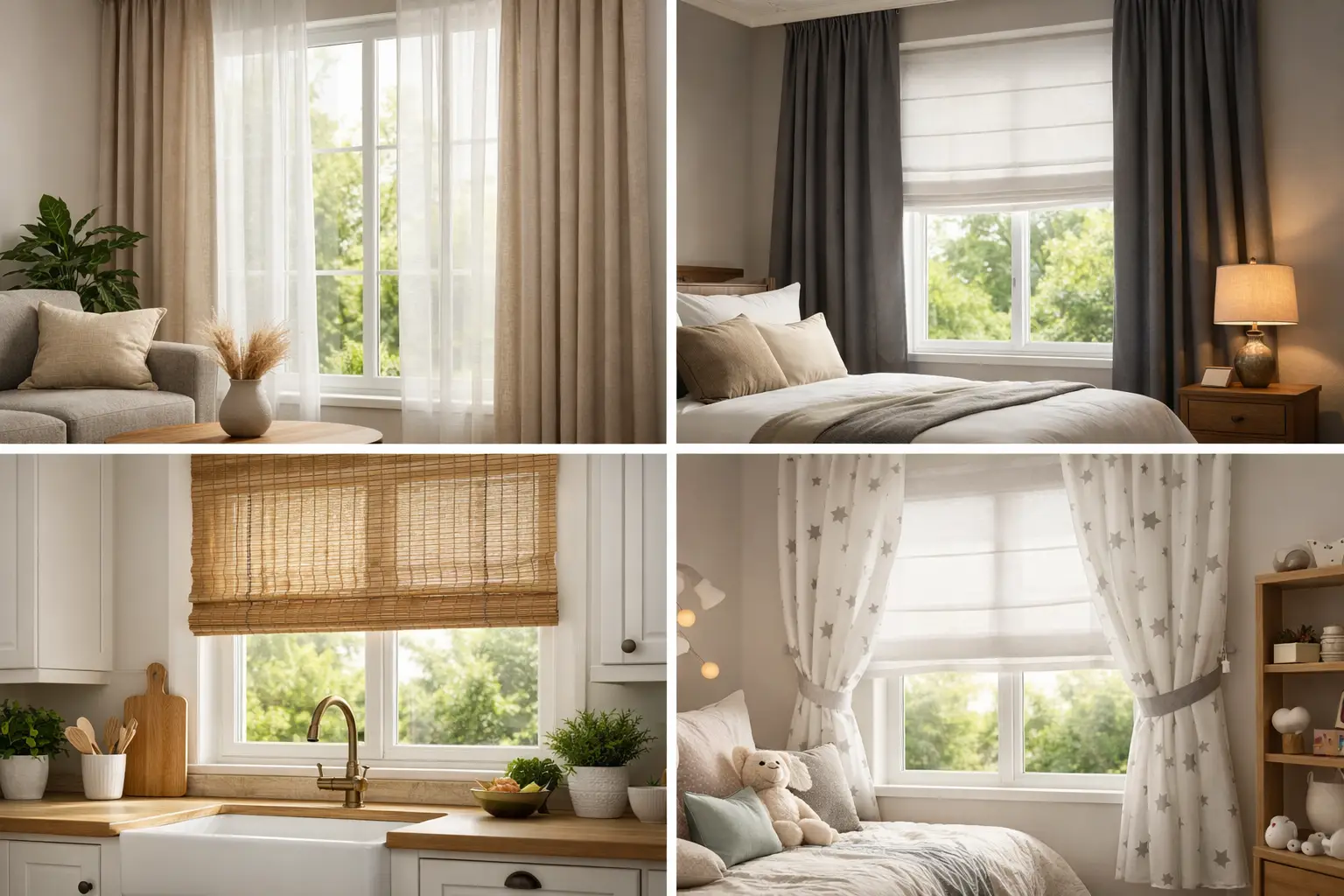
In a lounge, curtains often provide the sense of comfort and occasion that makes the space feel complete. They soften hard lines, improve the acoustics and offer a natural opportunity to introduce colour or pattern. If the room is used for watching television, a lining that reduces glare can be particularly worthwhile. For a bay window, separate tracks or poles can help each section retain its shape rather than drawing attention to uneven angles.

Bedrooms usually call for stronger light control and dependable privacy. Blackout lining is a popular choice, especially for children’s rooms, street-facing windows or anyone disturbed by early summer mornings. It does not have to mean a heavy or dark look: a light-coloured face fabric paired with blackout lining can still feel airy during the day.

Kitchens and bathrooms need materials that are practical around steam, splashes and frequent use. Blinds are often the natural choice here, as they keep fabric away from worktops, sinks and radiators. Moisture-resistant shutters, aluminium Venetian blinds or carefully selected roller blinds can offer privacy without making a hardworking room feel crowded.

Choose the window dressing before choosing the fabric

Fabric is understandably where many homeowners begin, but the style of treatment should come first. It determines how the window will operate, how much of the glass is covered and whether the finished look is relaxed, tailored or architectural.

Curtains for softness and warmth

Made-to-measure curtains are wonderfully adaptable. Full-length curtains can make standard windows appear taller, particularly when the pole or track is fitted above the window recess and extends beyond each side. This allows more daylight into the room when the curtains are open and gives the fabric space to stack neatly.

The heading style matters. A pencil pleat has a traditional, flexible appearance and suits many homes. Wave curtains create a clean, contemporary line with even folds, while pinch pleats offer a more formal, hand-finished look. There is no single correct choice: an older property with generous proportions may suit a richer heading and fuller fabric, whereas a newer home may benefit from the quiet simplicity of a wave track.

Curtains are also valuable on draughty windows and doors. Interlining can add body, improve insulation and create a more luxurious drape, though it is not essential in every room. It tends to suit heavier fabrics and more traditional schemes, while lighter, unlined sheers are ideal where daylight is the priority.

Blinds for control without bulk

Blinds are particularly useful where a curtain would feel too full or interfere with daily use. Roman blinds offer the softness of fabric with a tidier profile, making them a lovely choice for kitchens, studies and smaller bedrooms. They can be lined for warmth or blackout, and their structured folds work well with patterned fabric.

Roller blinds are understated and efficient, particularly for bathrooms, utility rooms and contemporary spaces. Venetian blinds allow you to angle the slats for privacy while still admitting light. Vertical blinds can be practical for wide patio doors, although curtains or shutters may offer a more decorative finish in a principal living space.

A blind and curtain combination is often the answer when you need both functionality and softness. For example, a Roman blind can provide daytime privacy and light control, while full-length curtains add warmth and finish. This layered approach works especially well in bedrooms and lounges.

Shutters for structure and lasting appeal

Plantation shutters bring order and character to windows, whether the home is period, rural or newly built. Their adjustable louvres make it easy to manage light and privacy without closing the room off completely. They are also an excellent option for bay windows, where a fitted solution follows each angle neatly.

Shutters do create a more permanent visual statement than curtains or blinds, so colour and panel layout deserve careful thought. Full-height shutters offer maximum coverage, tier-on-tier styles provide flexible control over the top and bottom sections, and café-style shutters preserve privacy at street level while leaving the upper part of the window open.

Get scale and proportion right

A common mistake is treating the size of the window as the only measurement that matters. The surrounding wall, ceiling height, radiator position, furniture placement and window opening all influence the finished effect.

Curtains that stop awkwardly above the floor can make a room look smaller. In most homes, a curtain should either just touch the floor, float a centimetre or so above it, or puddle deliberately for a more relaxed, decorative appearance. The right choice depends on the room and how easily the area needs to be cleaned. A slight float is practical in a busy family room, while a gentle puddle can look charming in a formal bedroom that sees less traffic.

Width is equally important. Curtains need sufficient fullness to look generous when closed, not stretched flat across the glass. With Roman blinds, the decision is often whether to fit inside the recess for a neat, contained look or outside it to make a smaller window appear larger. An experienced measure takes account of handles, tiles, uneven walls and opening directions before any fabric is cut.

Use colour, pattern and texture with confidence

Window dressings can either settle into the room or set its design direction. Neither approach is better. Neutral linen-effect curtains may be exactly what is needed in a room with colourful artwork or patterned upholstery, while a beautifully chosen printed fabric can bring a plain scheme to life.

Think about how the fabric will look in daylight and under artificial lighting. A colour that feels soft in a showroom can appear cooler in a north-facing room, while warm afternoon light may deepen a bold tone. Taking fabric samples home and viewing them at different times of day is a sensible step, particularly with greens, greys, creams and blues.

Texture is often what makes a neutral room feel inviting. Woven fabrics, embroidery, velvet and subtle checks bring depth without demanding attention. In homes with pets or young children, it is also worth considering how a fabric will wear. Delicate pale cloth may be lovely in a formal sitting room but less forgiving beside a frequently used patio door.

A home window dressing guide to lining and privacy

Lining is not simply an extra layer hidden behind the fabric. It affects how curtains hang, how they protect the face fabric and how much warmth and light they retain. Standard lining gives a neater finish and adds modest insulation. Blackout lining is best where darkness matters. Thermal or interlined options can make a noticeable difference in rooms with older glazing or exposed elevations.

Privacy should be considered during both day and evening. Sheer curtains soften the view in daylight, but once the lights are on, they offer little concealment. A secondary blind, lined curtain or shutter can provide the coverage needed after dark without sacrificing daytime light.

Why professional measuring and fitting matter

Bespoke window dressings are only as good as their fit. A few millimetres can affect whether a blind clears a handle, whether shutters open comfortably or whether curtains sit evenly above the floor. Professional measuring also identifies details that are easy to overlook, such as uneven recesses, projecting sills, radiators and the best fixing method for the wall.

At Country Interiors, advice, measuring, hand-finished making and fitting are considered parts of the same service. This takes the pressure off homeowners who want a personal result without having to second-guess track positions, fabric quantities or installation details.

Give yourself permission to live with samples for a few days and to consider the room as a whole, not just the window. When the treatment is chosen with care and fitted precisely, it does more than frame the view: it gives the room the comfortable, finished feeling that makes a house feel like home.

Leave a comment

Home Window Dressing Guide for Every Room

A window can be perfectly positioned, generously sized and filled with natural light, yet still leave a room feeling unfinished. The right treatment brings softness, privacy and character, while helping a house feel warmer and more considered. This home window dressing guide explains how to make choices that suit your rooms, your lifestyle and the way you want your home to feel.

The best result is rarely about choosing the most dramatic fabric or the most fashionable blind in isolation. It comes from balancing practical needs with proportion, colour, texture and a precise fit. A dressing that works beautifully in a sunny kitchen may be entirely wrong for a bedroom facing a busy road.

Start with what the room needs

Before looking through fabrics or finishes, consider what the window needs to do. Privacy, light control, insulation and appearance all matter, but their order changes from room to room.

In a lounge, curtains often provide the sense of comfort and occasion that makes the space feel complete. They soften hard lines, improve the acoustics and offer a natural opportunity to introduce colour or pattern. If the room is used for watching television, a lining that reduces glare can be particularly worthwhile. For a bay window, separate tracks or poles can help each section retain its shape rather than drawing attention to uneven angles.

Bedrooms usually call for stronger light control and dependable privacy. Blackout lining is a popular choice, especially for children’s rooms, street-facing windows or anyone disturbed by early summer mornings. It does not have to mean a heavy or dark look: a light-coloured face fabric paired with blackout lining can still feel airy during the day.

Kitchens and bathrooms need materials that are practical around steam, splashes and frequent use. Blinds are often the natural choice here, as they keep fabric away from worktops, sinks and radiators. Moisture-resistant shutters, aluminium Venetian blinds or carefully selected roller blinds can offer privacy without making a hardworking room feel crowded.

Choose the window dressing before choosing the fabric

Fabric is understandably where many homeowners begin, but the style of treatment should come first. It determines how the window will operate, how much of the glass is covered and whether the finished look is relaxed, tailored or architectural.

Curtains for softness and warmth

Made-to-measure curtains are wonderfully adaptable. Full-length curtains can make standard windows appear taller, particularly when the pole or track is fitted above the window recess and extends beyond each side. This allows more daylight into the room when the curtains are open and gives the fabric space to stack neatly.

The heading style matters. A pencil pleat has a traditional, flexible appearance and suits many homes. Wave curtains create a clean, contemporary line with even folds, while pinch pleats offer a more formal, hand-finished look. There is no single correct choice: an older property with generous proportions may suit a richer heading and fuller fabric, whereas a newer home may benefit from the quiet simplicity of a wave track.

Curtains are also valuable on draughty windows and doors. Interlining can add body, improve insulation and create a more luxurious drape, though it is not essential in every room. It tends to suit heavier fabrics and more traditional schemes, while lighter, unlined sheers are ideal where daylight is the priority.

Blinds for control without bulk

Blinds are particularly useful where a curtain would feel too full or interfere with daily use. Roman blinds offer the softness of fabric with a tidier profile, making them a lovely choice for kitchens, studies and smaller bedrooms. They can be lined for warmth or blackout, and their structured folds work well with patterned fabric.

Roller blinds are understated and efficient, particularly for bathrooms, utility rooms and contemporary spaces. Venetian blinds allow you to angle the slats for privacy while still admitting light. Vertical blinds can be practical for wide patio doors, although curtains or shutters may offer a more decorative finish in a principal living space.

A blind and curtain combination is often the answer when you need both functionality and softness. For example, a Roman blind can provide daytime privacy and light control, while full-length curtains add warmth and finish. This layered approach works especially well in bedrooms and lounges.

Shutters for structure and lasting appeal

Plantation shutters bring order and character to windows, whether the home is period, rural or newly built. Their adjustable louvres make it easy to manage light and privacy without closing the room off completely. They are also an excellent option for bay windows, where a fitted solution follows each angle neatly.

Shutters do create a more permanent visual statement than curtains or blinds, so colour and panel layout deserve careful thought. Full-height shutters offer maximum coverage, tier-on-tier styles provide flexible control over the top and bottom sections, and café-style shutters preserve privacy at street level while leaving the upper part of the window open.

Get scale and proportion right

A common mistake is treating the size of the window as the only measurement that matters. The surrounding wall, ceiling height, radiator position, furniture placement and window opening all influence the finished effect.

Curtains that stop awkwardly above the floor can make a room look smaller. In most homes, a curtain should either just touch the floor, float a centimetre or so above it, or puddle deliberately for a more relaxed, decorative appearance. The right choice depends on the room and how easily the area needs to be cleaned. A slight float is practical in a busy family room, while a gentle puddle can look charming in a formal bedroom that sees less traffic.

Width is equally important. Curtains need sufficient fullness to look generous when closed, not stretched flat across the glass. With Roman blinds, the decision is often whether to fit inside the recess for a neat, contained look or outside it to make a smaller window appear larger. An experienced measure takes account of handles, tiles, uneven walls and opening directions before any fabric is cut.

Use colour, pattern and texture with confidence

Window dressings can either settle into the room or set its design direction. Neither approach is better. Neutral linen-effect curtains may be exactly what is needed in a room with colourful artwork or patterned upholstery, while a beautifully chosen printed fabric can bring a plain scheme to life.

Think about how the fabric will look in daylight and under artificial lighting. A colour that feels soft in a showroom can appear cooler in a north-facing room, while warm afternoon light may deepen a bold tone. Taking fabric samples home and viewing them at different times of day is a sensible step, particularly with greens, greys, creams and blues.

Texture is often what makes a neutral room feel inviting. Woven fabrics, embroidery, velvet and subtle checks bring depth without demanding attention. In homes with pets or young children, it is also worth considering how a fabric will wear. Delicate pale cloth may be lovely in a formal sitting room but less forgiving beside a frequently used patio door.

A home window dressing guide to lining and privacy

Lining is not simply an extra layer hidden behind the fabric. It affects how curtains hang, how they protect the face fabric and how much warmth and light they retain. Standard lining gives a neater finish and adds modest insulation. Blackout lining is best where darkness matters. Thermal or interlined options can make a noticeable difference in rooms with older glazing or exposed elevations.

Privacy should be considered during both day and evening. Sheer curtains soften the view in daylight, but once the lights are on, they offer little concealment. A secondary blind, lined curtain or shutter can provide the coverage needed after dark without sacrificing daytime light.

Why professional measuring and fitting matter

Bespoke window dressings are only as good as their fit. A few millimetres can affect whether a blind clears a handle, whether shutters open comfortably or whether curtains sit evenly above the floor. Professional measuring also identifies details that are easy to overlook, such as uneven recesses, projecting sills, radiators and the best fixing method for the wall.

At Country Interiors, advice, measuring, hand-finished making and fitting are considered parts of the same service. This takes the pressure off homeowners who want a personal result without having to second-guess track positions, fabric quantities or installation details.

Give yourself permission to live with samples for a few days and to consider the room as a whole, not just the window. When the treatment is chosen with care and fitted precisely, it does more than frame the view: it gives the room the comfortable, finished feeling that makes a house feel like home.

Leave a comment