
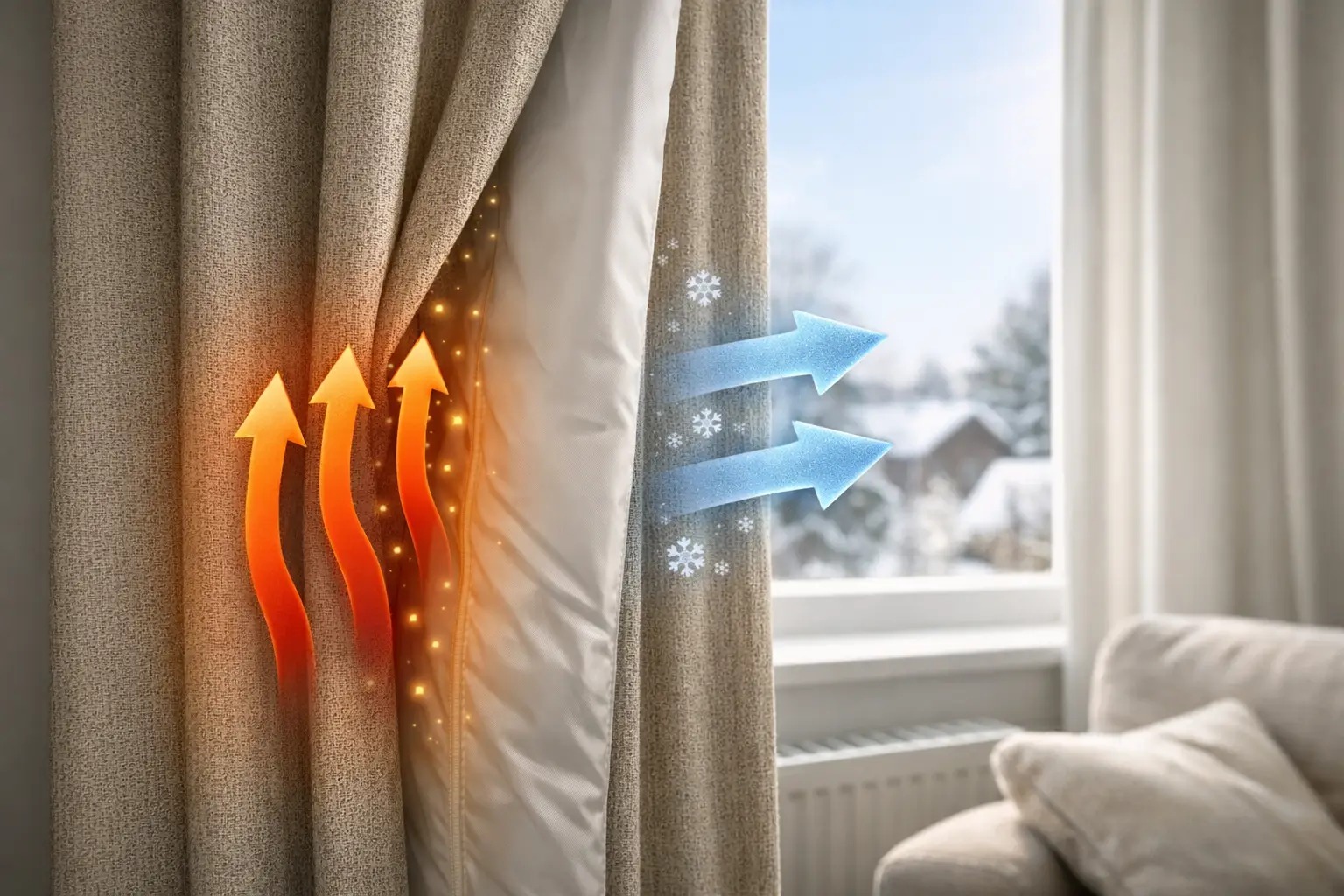
A room can feel beautifully decorated yet still feel cold once the heating goes off. Windows are often the reason. Even modern glazing loses more warmth than a well-insulated wall, and older windows can allow a noticeable chill to radiate into the room. This is where many homeowners ask: do lined curtains keep heat in? The simple answer is yes – provided the curtains are well chosen, properly measured and fitted to cover the window effectively.
Curtain lining is not a substitute for repairing draughty windows or improving insulation elsewhere in the home. It can, however, make a meaningful difference to warmth, comfort and the amount of time a room stays cosy on a winter evening. It also brings practical benefits for privacy, light control and protecting your chosen fabric.
How Do Lined Curtains Keep Heat In?
A curtain creates a layer of still air between the room and the glass. That layer slows down the movement of heat from the warm room towards the colder window surface. Adding a lining gives the curtain more body and creates a better barrier, particularly when it is closed fully and reaches close to the floor.
The result is not that heat is trapped permanently, but that it escapes more slowly. You may notice that the space by the window feels less chilly, that the room is more comfortable at lower thermostat settings, or that the warmth from an evening’s heating lingers longer.
The greatest benefit is usually felt in rooms with large areas of glazing, north-facing windows, bay windows and older properties. In a home with good modern double glazing, lined curtains can still add comfort and softness, though the improvement may be more subtle than it would be around single glazing or ageing frames.
Not All Curtain Linings Work in the Same Way
The word ‘lined’ can cover several different finishes. The most suitable choice depends on how the room is used, the fabric you love and the level of warmth or light control you need.
A standard cotton or polycotton lining gives curtains a neater drape, helps the face fabric hang well and offers a modest extra layer at the window. It is a popular, dependable choice for living rooms, bedrooms and dining rooms where a classic, tailored look matters as much as practicality.
Thermal lining is designed with insulation in mind. It is generally thicker or constructed with a coated backing that helps reduce heat loss through the window area. For a particularly cold bedroom, a sitting room that is only used in the evenings, or a period property with original windows, it can be a very worthwhile addition.
Interlining adds a separate, soft layer between the main fabric and the lining. Traditionally used with more luxurious curtains, it gives exceptional fullness and a sumptuous drape. It can also improve insulation, although its main appeal is often the richer look and feel it brings to a room.
Blackout lining is chiefly chosen to block light, making it ideal for bedrooms, nurseries and media rooms. It can provide some thermal benefit because it adds density, but it should not automatically be assumed to perform in exactly the same way as a dedicated thermal lining. The right choice comes down to priorities rather than simply selecting the thickest option.
The Fit Matters as Much as the Lining
Even the best thermal lining will have limited effect if the curtains are too narrow, too short or leave wide gaps around the window. Heat naturally moves towards colder areas, and a poorly fitted curtain allows cold air to circulate freely around its edges.
For the best performance, curtains should extend beyond the sides of the window and sit above the frame. This helps cover the coldest parts of the opening and reduces side gaps. A generous heading width is equally useful: flat, stretched curtains do not create the same insulating air layer as curtains with enough fullness.
Length is important, too. Curtains that finish at or just above the floor tend to keep the window area better enclosed than those stopping at sill level. In a bay window, careful measuring is especially valuable because each angle, pole bend and return needs to be considered. A professional measure ensures the finished treatment looks balanced while serving its practical purpose.
There is one important exception. If a radiator sits beneath the window, full-length closed curtains can hold heat between the curtain and glass rather than allowing it to warm the room. In this situation, a sill-length curtain, a shaped treatment, or positioning the curtain carefully when the heating is on may be more sensible. Every window deserves its own solution.
Poles, Tracks and Returns
The way curtains are hung affects their performance. A track or pole fitted close to the wall with curtains that return towards the wall at each side can reduce the gaps where colder air enters the room. A pelmet or upholstered valance may also help limit heat movement at the top, while adding a traditional finishing detail suited to many period and country-style interiors.
This does not mean every room needs a heavily dressed window. A clean, contemporary wave heading can work beautifully with thermal lining when it is measured generously and fitted with care. The aim is to balance the look of the room with the comfort you want from it.
Fabric Choice Can Add Warmth Too
The face fabric contributes to how a curtain performs. Heavier woven fabrics such as wool, velvet, chenille and dense jacquards naturally have more substance than very lightweight sheers. When paired with a suitable lining, they can feel particularly reassuring in a draught-prone room.
That said, a lighter linen-look fabric does not have to be ruled out. Its relaxed appearance may be exactly right for the room, and a quality thermal lining can provide much of the practical performance you need. Choosing made-to-measure curtains allows the fabric, lining and heading to be considered together rather than asking one element to do all the work.
Colour has a small practical role as well. Darker fabrics may absorb more solar warmth when curtains are open, but daylight and the direction of the window have a greater effect. Choose colours primarily for the atmosphere they create in your home, then select a lining that supports the room’s comfort.
Daily Habits That Make a Difference
Lined curtains work best as part of a sensible routine. On bright winter days, opening curtains allows natural sunlight to warm the room. Closing them at dusk creates that insulating layer when outdoor temperatures begin to fall.
Keep curtains closed overnight in bedrooms and living spaces during colder weather, especially where the windows feel cold to the touch. Make sure they are drawn properly rather than left with a gap at the centre or sides. These small habits cost nothing and help you get the full value from your window dressings.
It is also worth managing condensation. Curtains should not be pressed tightly against wet glass for long periods, as trapped moisture can encourage mould and affect fabrics over time. Ventilate the room appropriately, wipe away persistent condensation and investigate whether it points to a wider issue with ventilation, heating or the window itself.
When Lined Curtains Are Most Worthwhile
For many homes across Staffordshire, Derbyshire and Cheshire, lined curtains are an excellent investment where comfort is the priority. They are particularly useful in Victorian and Edwardian homes, cottages, rooms with wide bays, and spaces where family members naturally gather in the evening.
They can also make commercial spaces, guest rooms and home offices feel more settled and welcoming. The improvement is often as much about eliminating the cold feeling near a window as it is about reducing heating demand. A warmer-feeling room is simply more enjoyable to use.
At Country Interiors, the process begins with understanding how you use each room, not simply choosing a fabric from a sample book. With thousands of fabrics, a choice of linings and professional measuring and fitting, the finished curtains can be tailored to the window, the décor and the practical needs of the household.
If a room is always the first to feel chilly, start at the window. A thoughtfully lined, properly fitted pair of curtains can bring the softness, privacy and finishing touch your interior needs, while helping your house feel more like the warm, comfortable home it should be.