
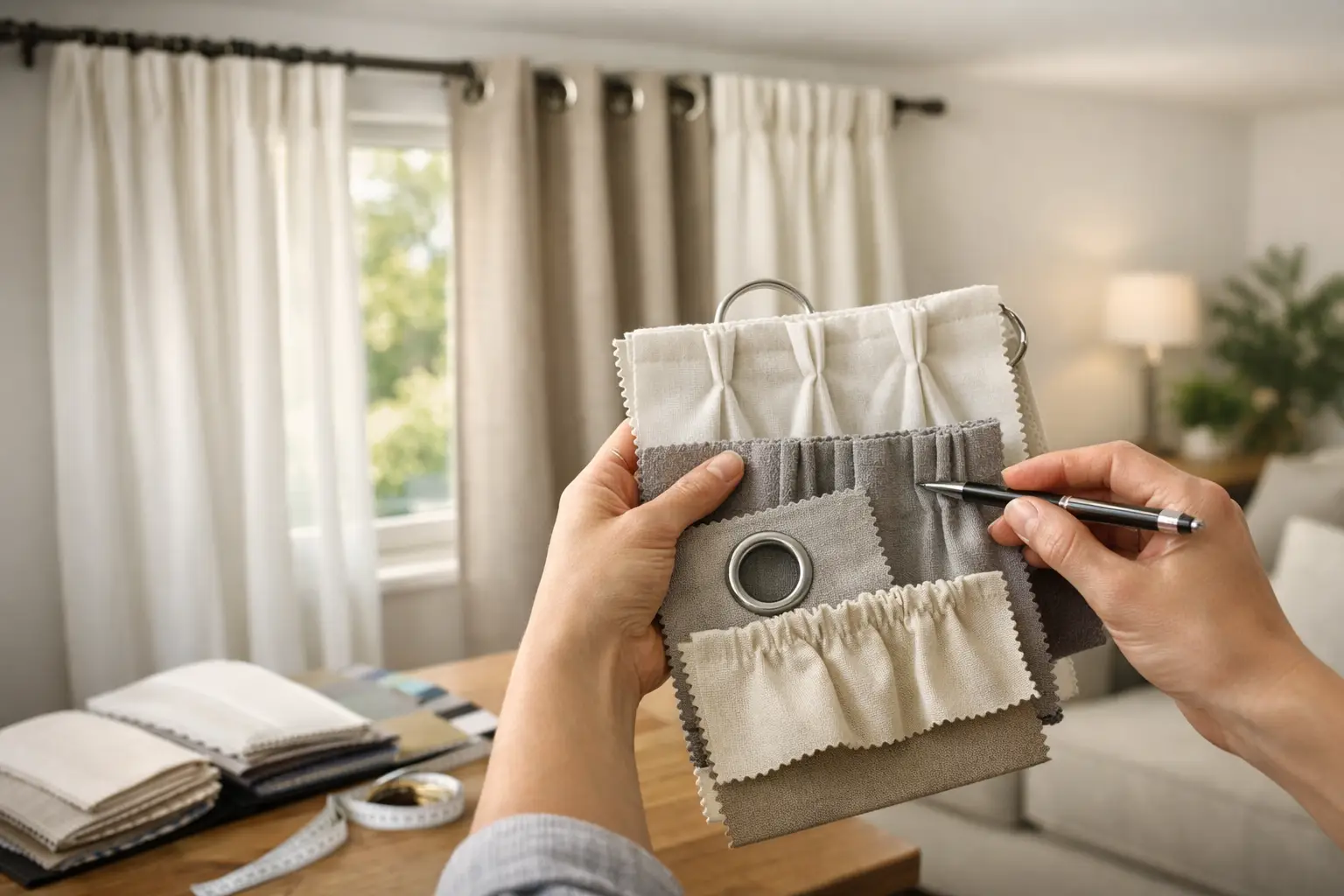
A beautiful curtain fabric can lose some of its impact if the heading is not right for the window. The way a curtain gathers, hangs and moves affects the whole room, from how formal it feels to how much light can enter. When you choose curtain heading styles, you are making a practical decision as well as a decorative one.
The right choice should suit your interior, the weight of your chosen fabric and the type of pole or track you would like to use. It should also work comfortably for everyday life, whether the curtains will be opened each morning in a busy family room or remain mostly decorative at a bedroom window.
Why curtain headings make such a difference
A curtain heading is the treatment sewn across the top of the curtain. It creates the folds and determines how the curtains attach to their track or pole. Some headings produce a relaxed, softly gathered look, while others create neat, tailored waves or more traditional pleats.
This small detail has a large visual effect. A full, hand-finished pinch pleat can give a formal sitting room a sense of permanence and elegance. A wave heading, by contrast, brings a clean contemporary line that works particularly well in modern extensions, kitchens and bedrooms.
There is no single best option for every home. The most successful window dressings consider the proportions of the room, ceiling height, the character of the property and how the curtains need to perform day to day.
How to choose curtain heading styles for your room
Begin with the atmosphere you would like to create. Traditional homes, period properties and rooms with classic furniture often suit fuller pleated headings. Contemporary interiors can carry simpler styles beautifully, especially when paired with understated poles or discreet tracks.
It is also worth looking at the window itself. A wide patio door may benefit from a heading that stacks back neatly, preserving as much glass as possible when open. A smaller bedroom window may need a heading with less bulk, particularly where space between the top of the window and the ceiling is limited.
Pencil pleat headings
Pencil pleat is a familiar and versatile choice. Its closely gathered rows create a soft, traditional finish that works across many different interior styles. It can be fitted to either a curtain track or a pole, using hooks, which makes it a flexible option if you already have suitable hardware in place.
This heading is particularly useful where a more relaxed look is wanted, or where curtains may be changed in future. The amount of gathering can be adjusted, although generous fullness will always give a richer result. Pencil pleat suits many fabrics, from light cottons through to lined decorative fabrics, but very heavy materials may look better with a more structured heading.
Pinch pleat headings
Pinch pleats are hand-sewn groups of folds, usually in double or triple formations, spaced evenly along the top of the curtain. They create an elegant, tailored look and are a popular choice for homeowners who want a truly bespoke finish.
A double pinch pleat has a refined appearance without feeling overly formal. Triple pinch pleats offer greater fullness and suit grander windows, deeper fabrics and more traditional schemes. Both work well on poles and tracks, though the style of hook and heading will need to be chosen carefully for the hardware.
Because the pleats are fixed in place, pinch pleat curtains retain their shape well. They are an excellent option for rooms where the curtains are a defining feature, such as a formal dining room, drawing room or principal bedroom. They do, however, use more fabric and generally require more room when stacked open.
Wave headings
Wave headings create smooth, continuous folds that run evenly from top to bottom. The effect is simple, contemporary and beautifully orderly, making it a strong choice for modern homes or schemes with clean-lined furniture.
This heading must be used with a compatible wave track or pole, as the carriers are spaced at precise intervals to form the ripples. It is not usually suitable for adapting to an existing standard track. When planned from the outset, however, it gives an exceptionally neat result and allows curtains to glide smoothly.
Wave curtains look particularly effective across large windows, bifold doors and glazed extensions. They need sufficient space behind or above the curtain for the folds to stack, so professional measuring is valuable here. The fabric matters too: soft to medium-weight fabrics usually form the most graceful waves, while very stiff fabrics can appear too rigid.
Eyelet headings
Eyelet curtains have metal rings set directly into the top of the fabric, allowing the pole to pass through. They create large, even folds and a straightforward, contemporary look. They are easy to draw by hand and are often chosen for informal bedrooms, lounges and smaller windows.
The pole remains visible between the folds, so it becomes part of the overall design. This can be an advantage where you have selected a decorative metal or wooden pole. Eyelets are only suitable for poles, not tracks, and the diameter and finish of the rings should complement the pole.
Although practical, eyelets do not offer the same level of tailored fullness as pinch pleats or the smooth precision of wave headings. They can also allow a little more light to show at the top of the curtain. For some rooms this is of no concern, but it may influence your decision in a bedroom where darkness and privacy are priorities.
Goblet and other decorative headings
Goblet headings create rounded, upright pleats that resemble a small goblet at the top of each fold. They have a luxurious, traditional character and are usually reserved for formal interiors, generous ceiling heights and fabrics with enough body to support the shape.
Other specialist headings can be considered for particular design schemes, but they should be selected with care. Ornate styles can look magnificent in the right setting, yet may feel out of place in a low-ceilinged room or a pared-back contemporary home. The aim is always for the curtains to belong naturally within the room, rather than compete with it.
Match the heading to the pole or track
Curtain hardware should never be an afterthought. A heading and its pole or track work as one system, affecting both appearance and ease of use. Pencil pleat and pinch pleat curtains are adaptable, as they can usually be used with tracks or poles. Eyelets need a pole, while wave headings need dedicated wave hardware.
Consider how often the curtains will be used. In a living room, a good-quality track can make even substantial lined curtains effortless to draw. For bay windows, a made-to-measure bent track may provide a far neater solution than trying to divide curtains over several straight poles.
The position of the hardware also changes the perceived proportions of the room. Fitting a pole or track higher above the window can make ceilings appear taller, while extending it beyond the window frame allows more daylight into the room when the curtains are open. These details are best settled during measuring, before the curtains are made.
Fabric, lining and fullness all play a part
The same heading can look very different depending on fabric choice. Linen blends and lighter cottons give a relaxed softness to pencil pleats and waves. Velvet, wool and heavier woven fabrics bring depth and structure, often making pinch pleats especially effective.
Lining is equally important. A quality lining improves drape, helps protect the face fabric from fading and gives curtains a more substantial finish. Interlining adds further body and insulation, which can be particularly welcome in older homes or rooms with large areas of glazing. It may also make a formal heading look fuller and more luxurious.
Fullness should be carefully calculated rather than guessed. Too little fabric can leave a heading looking flat and mean when the curtains are closed. Too much can create unnecessary bulk, making the curtains harder to stack back. A made-to-measure approach ensures the fabric allowance, heading type and final dimensions are considered together.
Let the room guide the final choice
A curtain heading should support how you use the room. In a bedroom, you may prioritise a close fit, a quality lining and a heading that works well with a track for dependable light control. In a lounge, the priority may be a statement fabric and hand-finished pinch pleats that frame the view. In a kitchen-diner, simple waves may offer the calm, uncluttered finish that a busy space needs.
At Country Interiors, a consultation allows each of these choices to be considered in the home, alongside fabric samples, existing furnishings and the practicalities of the window. Accurate measuring and professional fitting take the uncertainty out of achieving the finished look.
The best heading is the one that makes your curtains feel considered from every angle: beautiful when closed, graceful when open and entirely at home in the room you have created.