
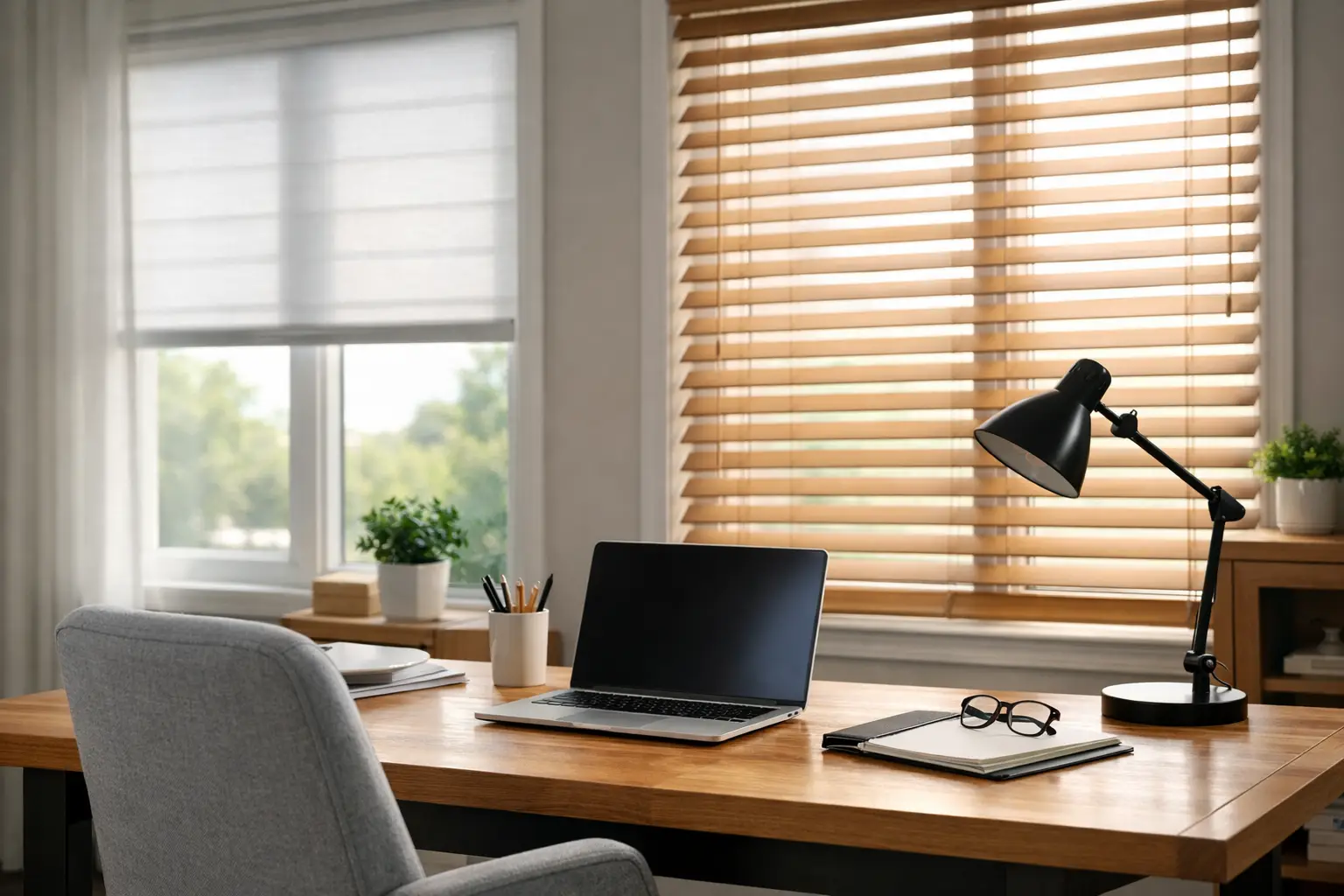
The desk may be neatly organised and the chair carefully chosen, but a bright patch of sun across a laptop screen can make even the most considered home office frustrating to use. The best blinds for home offices do far more than finish a window: they manage glare, protect privacy, soften the room and help create a place where it is easier to concentrate.
For many households, the home office must work hard. It might be a dedicated study, a guest bedroom corner or a converted dining room, and its light changes throughout the day. The right made-to-measure blind should respond to that reality while looking at home with the rest of your interior.
What the Best Blinds for Home Offices Need to Do
A successful office blind starts with the direction of the window. South- and west-facing rooms often need effective control of strong afternoon sunshine, while a north-facing study may benefit from a treatment that retains as much natural light as possible. East-facing windows can bring early morning glare, particularly difficult if you begin work at a screen.
Glare control is usually the first consideration. It is not simply a matter of making the room dark. A home office feels more pleasant when daylight is filtered rather than entirely removed, provided it does not create reflections on a monitor or tablet. Privacy matters too, especially in a ground-floor room facing a road or neighbouring property. Finally, consider warmth. Windows can be a source of heat loss in winter and excessive solar gain in summer, so the blind you choose can make the room more comfortable year-round.
The best choice therefore depends on how you use the room. Someone on video calls may value an even, flattering level of light. Someone working with paperwork may want the flexibility to brighten the room fully. A study that doubles as a spare bedroom will have different requirements again.
Roller Blinds for Clean, Effective Screen Control
Roller blinds are a popular option for home offices because they are neat, unobtrusive and straightforward to operate. When raised, they stack compactly at the top of the window, leaving the view and daylight clear. When lowered, they provide a smooth, uncluttered surface that suits both contemporary and more traditional schemes, depending on the fabric selected.
A sunscreen roller blind can be particularly useful where glare is the main problem. Its specialist fabric filters strong daylight and can reduce screen reflections while preserving a degree of outward view. This is often a better answer than a blackout fabric in a room used for daytime work, as it avoids making the space feel closed in.
For a street-facing office, a dim-out or privacy-focused roller fabric may be more appropriate. Remember, however, that a blind which offers privacy by day may not do so at night when the room is lit and it is dark outside. If complete evening privacy is essential, the fabric and fitting details need careful consideration. A professional consultation helps establish what is realistically required for the particular window.
Venetian Blinds Give Precise Light Adjustment
Venetian blinds are often among the most practical choices for a workspace because their slats can be tilted to direct light away from a desk without shutting out the day. This level of adjustment is valuable when the sun moves across the room, or when two people use the office at different times.
Aluminium Venetians offer a crisp, modern look and are available in a wide range of colours. They are especially suited to a practical study, a garden office or a room where a slim, tidy finish is preferred. Wood and faux-wood Venetians bring more warmth and character, making them an appealing choice in homes with natural textures, painted furniture or a country-inspired interior.
There are trade-offs. Slatted blinds have more individual surfaces than a roller blind, so they need occasional dusting. Real wood should also be chosen with care in rooms prone to high humidity, although that is less commonly an issue in a home office. The reward is excellent control over light and privacy, with a tailored appearance that can sit beautifully within a wider decorating scheme.
Roman Blinds Bring Warmth to a Dedicated Study
If the office is a room you want to feel settled and inviting, a Roman blind offers a softer, more decorative solution. It adds fabric, colour and pattern without the fuller look of curtains, and can tie the study to adjoining rooms through a shared fabric or complementary palette.
Roman blinds work especially well in offices that are also reading rooms, guest rooms or quieter parts of the home. A lined Roman blind can help soften daylight, improve the feeling of insulation and create a more finished atmosphere. With thousands of fabric options available, it is possible to choose anything from a subtle linen-look weave to a classic check, an understated botanical or a refined plain.
The main consideration is flexibility. A Roman blind is either raised, lowered or positioned somewhere between, rather than tilted in the way a Venetian blind can be. This is not a disadvantage where the desk is set away from the window or the room receives gentler light, but it may be less convenient for a screen placed directly opposite a sunny window.
Vertical Blinds Suit Wide Windows and Patio Doors
A wide expanse of glass, bay window or patio door needs a blind that can cover the full opening without feeling cumbersome. Vertical blinds remain a practical option in these situations. Their louvres can be turned to filter and redirect sunlight, then drawn fully aside when you want maximum light or access to a door.
Modern vertical blinds have moved well beyond the purely functional appearance many people remember. Contemporary fabrics, softer textures and carefully selected colours can give them a smart, restrained look. They are particularly useful in a home office overlooking the garden, where the changing light can be enjoyable but distracting at certain hours.
For a polished result, the headrail, louvre width and fabric should be selected in proportion to the window. This is one reason made-to-measure guidance makes such a difference, particularly with unusually shaped bays, recesses and large glazed areas.
Do Not Overlook Cellular and Pleated Blinds
Cellular blinds, sometimes called honeycomb blinds, are worth considering where comfort and energy efficiency are high on the list. Their structured pockets trap air, helping reduce heat loss through the window and moderating the feel of the room. In a chilly converted loft, a garden office or a room with large glazing, this can be a welcome benefit.
Pleated and cellular styles also offer a light, streamlined look. Depending on the fabric, they can gently diffuse sunlight while maintaining a calm atmosphere. Some systems are designed to sit neatly within the window frame, which is helpful where space is limited or where you would like to retain the character of the surrounding joinery.
As with every blind type, fabric openness and colour affect performance. Pale colours often make a compact room feel brighter, but they may not provide the level of glare reduction needed for a sunny workstation. Darker or denser fabrics can offer more control, though they may alter the mood of the room. Seeing samples in the actual space is the most reliable way to judge them.
Details That Make the Difference
The blind style is only part of the decision. Accurate measuring affects how effectively light is blocked, how neatly the blind sits and whether doors, handles or opening windows remain easy to use. A blind fitted inside a recess can look beautifully contained, but it needs sufficient depth and careful allowances. Outside-recess fitting can cover more of the window surround and reduce light gaps, particularly useful for privacy or strong sunlight.
Think about operation as well. A simple chain mechanism may be ideal for an easily reached window, while a motorised blind can be a worthwhile addition for tall, wide or awkwardly positioned glazing. Motorisation also makes it easier to adjust light during a busy working day without leaving your desk. Where children or visiting grandchildren are part of the household, safety-conscious operating options should be discussed from the outset.
Colour deserves practical thought as well as decorative attention. A soft neutral blind can create a calm backdrop for video calls and allow artwork or furniture to take the lead. A richly coloured Roman blind can give a small study much-needed personality. If the room is visible from the hall or living area, choosing a treatment that relates to the wider home helps the office feel like a natural part of it, rather than an afterthought.
A Bespoke Choice Creates a Better Working Room
There is no single blind that suits every home office. Roller blinds excel at clean screen control, Venetians offer the most day-to-day adjustment, Roman blinds provide softness and character, while vertical and cellular options solve particular challenges around wide glazing and insulation.
At Country Interiors, the starting point is always the room itself: its light, layout, use and existing style. With expert advice, careful measuring, quality fabrics and professional fitting, a window treatment can make your working space feel calmer in the morning, more private in the evening and more comfortable throughout the year. The right blind should not merely cover the window – it should help the room support the way you live and work.