
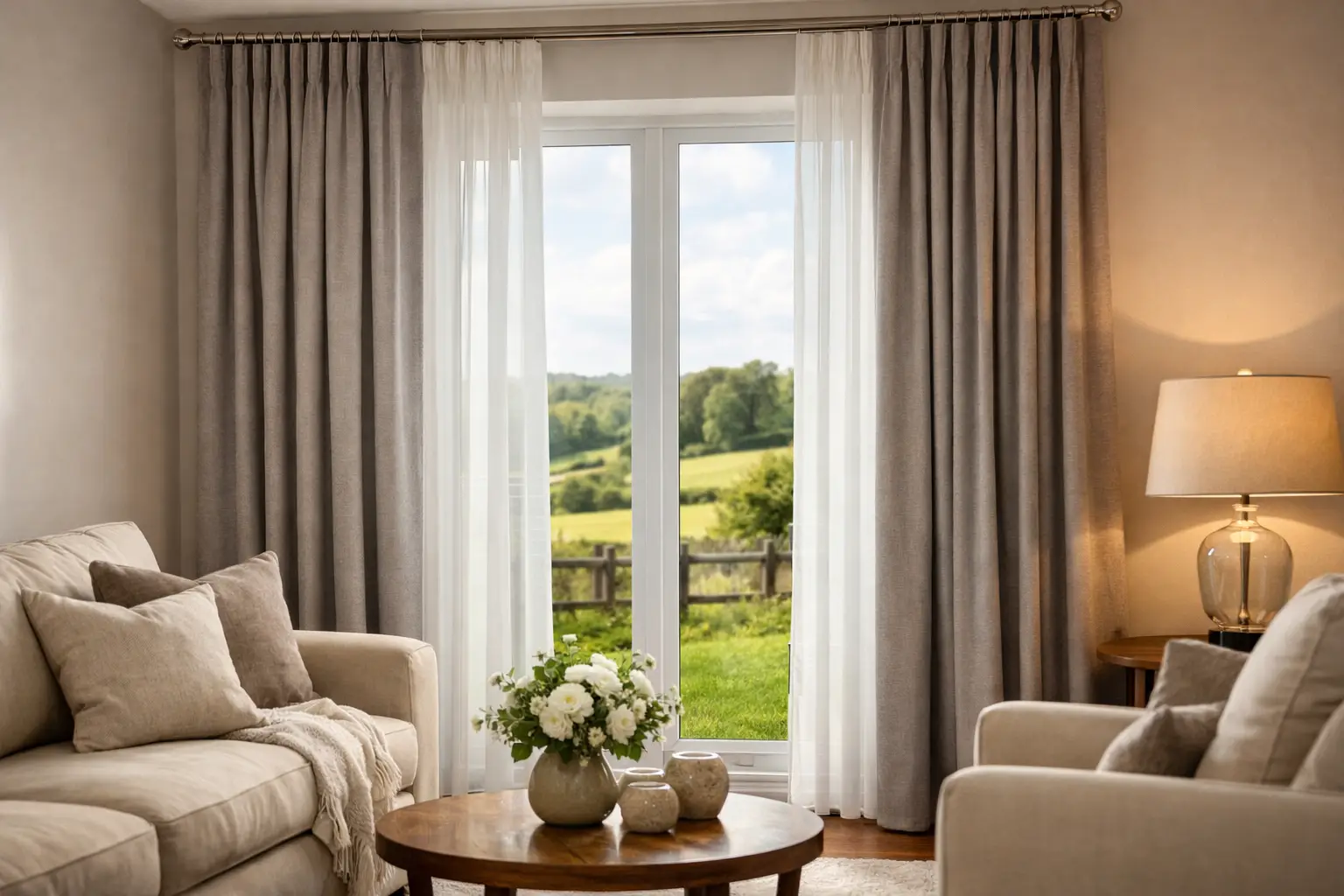
A bay window in a Victorian terrace, wide patio doors in a new-build kitchen or a draughty bedroom window in a country cottage all ask rather different things of their curtains. That is why bespoke curtains for Staffordshire homes are about far more than choosing a fabric that catches the eye. They should suit the proportions of the room, the way you live in it and the character of the house itself.
Ready-made curtains can be useful for a quick refresh, but they often leave compromises in their wake: an awkward drop, a pole that is too narrow, or fabric that does not give the privacy, warmth or light control you expected. Made-to-measure curtains are planned around the window and finished around the home, creating a result that feels considered rather than simply fitted.
Why the right curtains change a room
Curtains occupy a generous part of the visual space in most rooms. Their colour, texture and movement can make a compact sitting room feel softer, give a bedroom a more restful atmosphere or bring a large open-plan area together. Yet the practical benefits matter just as much.
A properly lined curtain can improve comfort around older windows, helping to reduce the feeling of cold near the glass. In bedrooms, blackout linings can make an early summer morning less intrusive. In rooms overlooked by neighbours or passing traffic, the right heading, fullness and track position can give privacy without making the space feel closed in.
The best choice depends on the room. A formal dining room may suit fuller, hand-finished curtains in a rich woven fabric, while a busy family room may call for a more forgiving, easy-care material. There is no single ‘best’ curtain fabric or heading. The aim is to make choices that feel right for the house and continue to work well day after day.
Bespoke curtains for Staffordshire homes start with the window
Windows across Staffordshire are wonderfully varied. Period properties may have uneven reveals, generous bay windows, original picture rails or unusual ceiling heights. Modern homes often have wide glazing, bifold doors and clean-lined rooms that need curtains to stack neatly when open. Measuring is therefore not a small detail to be left until the end.
A professional measure considers where the curtains need to sit, not merely the glass size. The position of radiators, skirting boards, window handles, alcoves and furniture can all affect the final design. So can the type of pole or track, how far the curtains must draw back and whether they need to clear doors that are used every day.
This is where a full service provides real reassurance. Rather than selecting fabric first and hoping it will work, the design, measuring and fitting stages inform one another. The finished curtains have the correct drop, sensible proportions and enough fullness to hang beautifully.
Choosing a heading that suits the room
Curtain headings influence both the look and the function of the treatment. Pencil pleats offer a classic, flexible appearance and work well in many traditional and contemporary settings. Wave headings create a gentle, even ripple, particularly suited to wide tracks and modern rooms. Pinch pleats bring a more tailored, formal finish and can look especially at home in a drawing room, dining room or principal bedroom.
It is worth thinking about how often the curtains will be opened. A decorative heading may be perfect for a window dressed mainly for warmth and appearance, while frequently used patio doors need a reliable track and an easy glide. A good recommendation balances visual preference with everyday use.
Fabric is about feel as well as colour
With thousands of fabrics available, the choice can initially feel daunting. Looking at samples in the room is invaluable because daylight changes through the day, and a shade that looks warm in a showroom may appear cooler at home. Existing flooring, paintwork, upholstery and even the view beyond the window should all be considered.
Texture often makes the difference between curtains that simply match and curtains that give a room depth. Linen-look weaves offer relaxed character, velvets bring warmth and richness, and patterned fabrics can introduce personality without requiring every wall to be bold. In a smaller room, a subtle pattern or tonal texture may be enough. In a larger space, curtains can confidently become the feature that ties the scheme together.
Linings, interlinings and comfort through the seasons
The fabric seen from the room is only part of the finished curtain. Linings shape how curtains drape, protect the face fabric from sun exposure and influence privacy and insulation. This unseen layer is often where a bespoke treatment earns its keep.
Standard lining gives body and a clean finish. Blackout lining is a practical choice for bedrooms, nurseries and rooms affected by street lighting, though it may not be necessary everywhere. Thermal lining can help improve comfort around colder windows, while interlining adds a luxurious weight and fuller appearance that suits traditional homes and substantial fabrics.
There are trade-offs. Heavier curtains can provide a beautifully sumptuous result, but they need suitable tracks or poles and may not be ideal where curtains must be pulled back frequently from a narrow wall space. A lighter lining may be better for a sunny kitchen or a smaller window where softness is wanted without too much bulk.
The value of hand finishing and professional fitting
It is easy to underestimate the skill behind curtains that hang evenly. Pattern matching, accurate hems, carefully formed corners and the balance of the lining all affect the final appearance. Hand finishing gives the maker the control needed to treat each pair as an individual piece, especially where windows are irregular or fabrics have a prominent design.
Professional fitting completes the process. It ensures that poles, tracks and brackets are fixed securely and positioned for the best possible coverage and stack-back. The curtains can then be dressed properly, with the pleats arranged so they settle into their intended shape. This is particularly important with fuller headings and heavier fabrics, which benefit from care in their first few weeks.
For homeowners, the benefit is simple: less uncertainty. There is no need to calculate fullness, interpret tape measurements or struggle with a pole that was not designed for the weight of the curtains. Country Interiors brings together design advice, fabric selection, hand-finished making and fitting so that each stage supports the next.
Coordinating curtains with blinds and shutters
Curtains do not need to carry every practical requirement alone. Layering window treatments can give greater control and a more finished look. A Roman blind beneath curtains can provide daytime privacy while the curtains add softness and warmth in the evening. Plantation shutters offer a structured, architectural finish, while curtains soften the surrounding room and improve insulation.
This approach works especially well on large windows and doors. For example, shutters or blinds can manage light during the day, while curtains frame the opening and make the room feel more welcoming after dark. The combination should not feel overdone; selecting related colours, textures or tones keeps the scheme calm and intentional.
Making a choice you will still enjoy years from now
Trends can be a useful starting point, but windows are a long-term investment. If you are naturally drawn to neutral fabrics, introduce interest through weave, trim or a carefully chosen lining rather than choosing a colour you may tire of quickly. If you love pattern, use it with confidence where the room has enough space and balance elsewhere is simple.
Before making a final decision, consider the room at different times of day, who uses it and what the curtains need to do. A guest room may prioritise appearance, while a main bedroom needs darkness and calm. A sitting room might need warmth, privacy and a fabric that stands up to family life. These practical questions lead to choices that remain satisfying long after the initial transformation.
The most successful curtains do not shout for attention every time you enter the room. They sit naturally within it, soften the light, frame the view and make the home feel more complete. Taking the time to have them properly designed, made and fitted is a small decision that can bring comfort and pleasure to every day spent at home.