
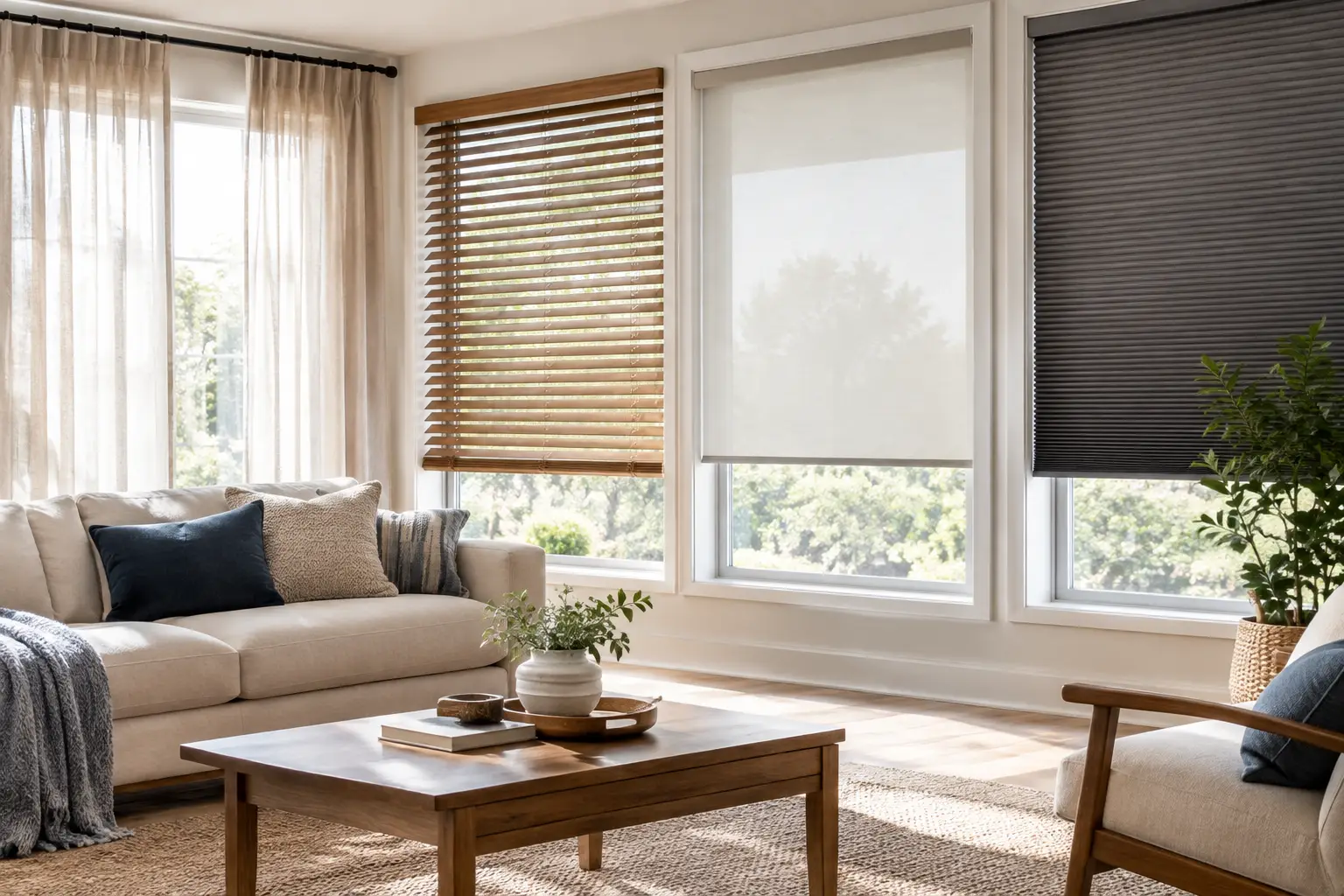
A window may be the source of a room’s best light, but left bare it can make an otherwise carefully furnished space feel unfinished. The best window coverings do more than dress the glass: they soften acoustics, improve privacy, help manage warmth and bring the colours and textures of a scheme together. Choosing well is about balancing these practical needs with the character you want your home to have.
For many homeowners, the difficulty is not a lack of choice. It is knowing which style will work with the proportions of the room, the direction of the light, the way the space is used and the furnishings already in place. A well-considered, made-to-measure treatment takes all of this into account, creating a finish that feels settled rather than simply fitted.
What makes the best window coverings?
There is no single answer for every home. A peaceful bedroom has different requirements from a kitchen window above the sink, while a period bay window calls for a different approach to a wide set of contemporary patio doors. The best choice is one that performs properly in its setting and looks right from every angle.
Start with light and privacy. South-facing rooms often benefit from a treatment that filters bright sunshine without making the room gloomy. Bedrooms may need a more effective barrier against early morning light, particularly in summer. Ground-floor living rooms can need privacy in the evening while still allowing daylight in during the day.
Then consider proportion. A small window can look more generous when curtains are hung beyond the frame and allowed to stack neatly at either side. A tall window may suit full-length curtains that draw the eye upwards, while an awkwardly shaped or shallow recess can be better served by a blind or shutter fitted precisely within it. Good measuring is not a minor detail here. It determines whether the final result looks tailored and operates smoothly.
Finally, think about how the room should feel. Linen-look fabrics, timber tones and softly folded Roman blinds bring warmth and texture. Sleek rollers and carefully chosen shutters can give a cleaner, more structured appearance. Neither approach is automatically better; the right treatment should belong naturally to the home and the people living in it.
Curtains: warmth, softness and a finished look
Curtains remain a favourite for good reason. They offer enormous flexibility in fabric, colour, pattern and heading style, allowing them to become a quiet backdrop or a defining feature of the room. They are particularly effective in lounges, dining rooms and bedrooms, where softness and comfort matter.
Lined curtains add body, improve drape and help protect the face fabric from sunlight. For colder rooms or older properties, thermal lining can make a noticeable difference to comfort around the window. In bedrooms, blackout lining is often worthwhile, though it is worth remembering that light can still enter around the edges of the curtains unless the treatment is designed with overlap and track or pole placement in mind.
Fabric selection should be guided by more than a sample held against the wall. A colour can change considerably between morning and evening, and a bold pattern that looks charming on a small swatch may feel overwhelming across a large pair of curtains. Seeing fabric alongside paint, flooring and upholstery helps create a more confident choice.
The heading also changes the look. Wave headings suit relaxed contemporary interiors and form neat, even folds. Pencil pleats offer a traditional, adaptable finish. Pinch pleats have a more formal tailored quality and work beautifully in rooms where the curtains are intended to make a statement. Each needs the right track or pole, and professional fitting ensures the proportions are properly considered.
Blinds: precise control where it matters
Blinds are often the practical answer when space is limited or the window needs direct, adjustable light control. They work especially well in kitchens, bathrooms, studies and conservatories, although the range of fabrics and finishes means they can be equally at home in a sitting room or bedroom.
Roman blinds bring the softness of fabric with a more compact finish than curtains. When raised, their folds create texture and interest; when lowered, they provide a neat, tailored frame to the window. They are ideal where you want a fabric-led look but do not have room for curtains to stack at the sides.
Roller blinds are understated and efficient. They can be made in sheer, dim-out or blackout fabrics, making them useful in rooms where glare is an issue or where privacy changes throughout the day. A moisture-resistant roller blind is also a sensible option for bathrooms and kitchens, where splashes and humidity rule out some fabrics.
Venetian blinds offer finely adjustable control over light and privacy. Aluminium is practical for busy, moisture-prone spaces, while wooden or faux-wood finishes can add a warmer look. Vertical blinds remain a strong option for wide windows and doors, particularly when access is needed regularly. The key is choosing a quality system that hangs evenly and is fitted to operate without catching.
Shutters: a lasting architectural feature
Plantation shutters bring structure and a sense of permanence to a room. Their adjustable louvres allow daylight to be directed while preserving privacy, making them particularly useful for street-facing rooms, bay windows and bathrooms. They can also reduce the sense of visual clutter, as there are no cords, fabric stacks or trailing hems.
Full-height shutters give a smart, balanced appearance and suit many window styles. Tier-on-tier shutters offer greater flexibility because the top and bottom panels can open independently, allowing light through the upper section while keeping the lower half closed. Café-style shutters cover the lower portion of the window and are a lovely choice where privacy is needed without obscuring the view or daylight above.
Shutters are an investment, so accurate surveying is essential. Their appeal lies in their crisp alignment with the window shape, particularly in bays or windows with unusual angles. Poorly measured shutters are immediately noticeable; professionally designed and installed shutters feel as though they have always belonged to the property.
Layering window treatments for comfort and character
Some of the most successful rooms combine treatments rather than relying on one alone. Curtains over a roller blind, for example, give a bedroom both effective blackout control and the warmth of fabric. A Roman blind paired with full-length curtains can add depth to a formal living room, while shutters with curtains at the sides create a generous, welcoming finish in a bay window.
Layering is not always necessary. In a compact kitchen or a minimalist space, one well-chosen blind may be all that is needed. But where a room feels cold, echoing or visually flat, the additional texture of curtains, cushions or a coordinating lampshade can make a marked difference.
When combining treatments, allow each one to have a job. The blind or shutter may control light and privacy, while curtains soften the room and improve insulation. Choosing fabrics and finishes that complement rather than compete will keep the result calm and considered.
The value of made-to-measure advice
Ready-made options can be tempting, but they often involve compromises on width, drop, fabric and fitting position. A treatment that is a few centimetres too narrow can leave gaps and make a window look mean. One that is too long can pool awkwardly or obstruct a radiator. Bespoke work is about resolving those details before anything is made.
An experienced consultation also takes away much of the uncertainty. It is an opportunity to discuss how you use the room, compare fabric and finish options in your own light, and decide what will work over the years rather than just on the day it is installed. From careful measuring and hand-finished production to professional fitting, Country Interiors helps turn those decisions into window dressings that fit beautifully and work as they should.
The best window covering is ultimately the one you stop noticing as a problem and start enjoying as part of your home. Give it the same thought as your flooring, sofa or paint colour, and it can bring the whole room quietly into place.