
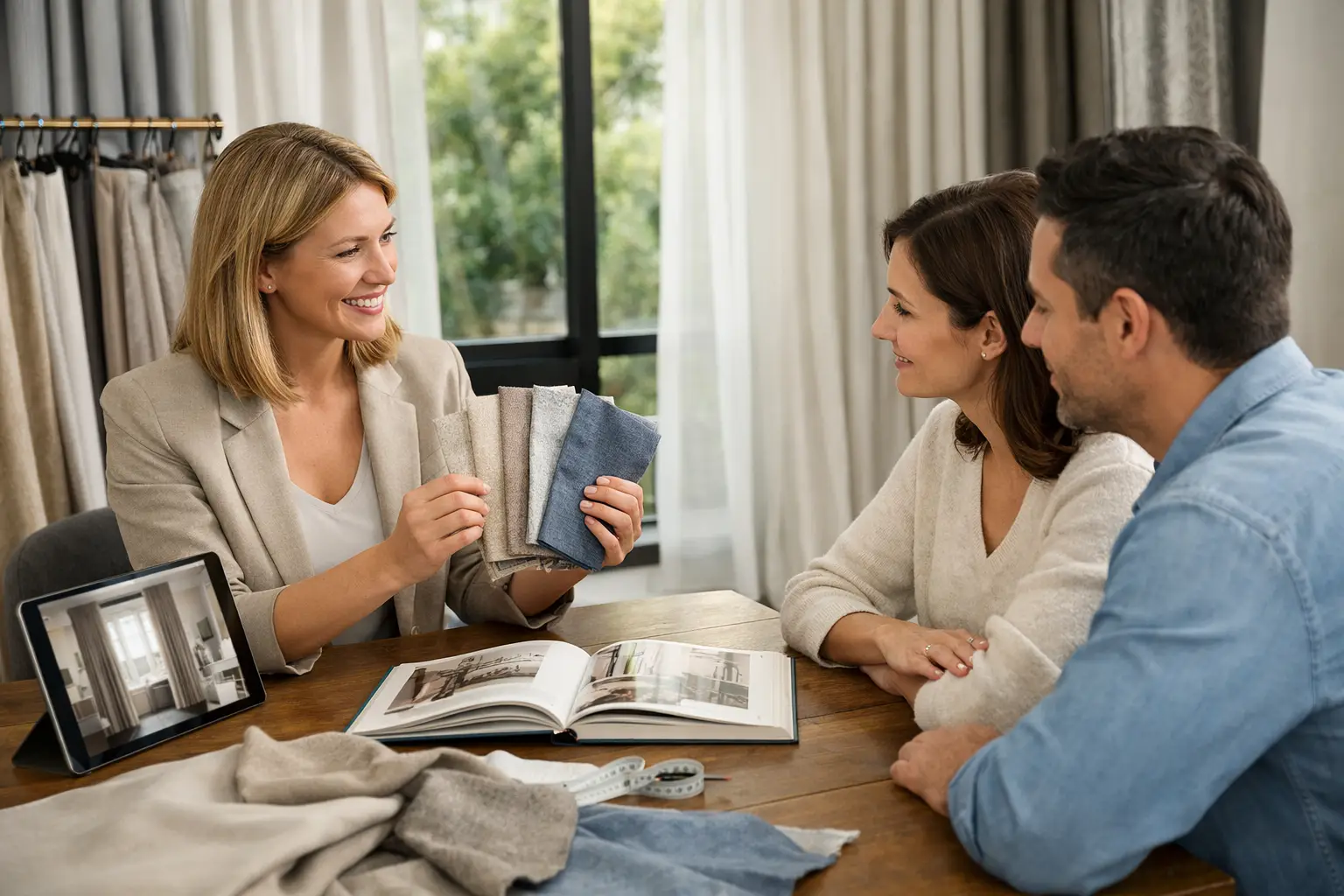
A window can change the feel of a room more than most people expect. Get the curtains right and everything looks calmer, warmer and more considered. Get them wrong and even a beautifully decorated space can feel unfinished. That is exactly why many homeowners ask how bespoke curtain consultations work before they commit – they want to know what to expect, what decisions they will need to make and how the process leads to a result that feels right for their home.
At heart, a bespoke consultation is there to remove guesswork. Rather than choosing something off the shelf and hoping it works, you are guided through the practical and decorative details by someone who understands proportion, fabric behaviour, fitting requirements and the way a room is actually used.
What a bespoke curtain consultation is really for
A bespoke curtain consultation is not simply a fabric appointment. It is the stage where style, function and accuracy come together. The purpose is to understand the room properly before anything is made.
That means looking at more than the window itself. A good consultation considers how much natural light you want to keep or block, whether privacy is a concern, how formal or relaxed the room should feel, and how the curtains will sit alongside furniture, flooring and wall colour. In a bedroom, for example, lining and fullness may matter most. In a sitting room, the emphasis may be on softness, drape and how the design ties the whole scheme together.
This is where bespoke service differs from a simple product purchase. You are not left to interpret measurements, fabric samples and track options on your own. Instead, each choice is shaped around your home and the way you live in it.
How bespoke curtain consultations work in practice
Most consultations begin with a conversation. Sometimes homeowners already know the look they want. Just as often, they know the room does not feel finished but are unsure why. Both starting points are completely normal.
During the consultation, the designer will usually ask about the room, the age and style of the property, the amount of sunlight it receives and whether there are any practical challenges such as radiators, deep sills, French doors or awkward recesses. These details matter because they affect not only appearance but how the curtains need to function day to day.
Measurements are a key part of the process. Precise measuring is one of the main reasons people choose a professional consultation in the first place. Curtain length, stack back, pole placement and heading style all influence the final result. A few centimetres can make the difference between curtains that look balanced and curtains that always seem slightly off.
There is also discussion around tracks, poles and headings. Pencil pleat, pinch pleat and wave curtains all create a different look. Some suit traditional interiors beautifully, while others give a cleaner, more contemporary line. There is no single right answer. It depends on the room, the fabric and the finish you want.
Fabric choices and what the consultant helps you decide
Fabric is often the most enjoyable part of the consultation, but it can also be the most overwhelming. When you are presented with a large range, it helps to have experienced guidance.
A consultant will usually narrow the options in a thoughtful way. Rather than showing everything, they help you focus on fabrics that suit your scheme, budget and practical needs. That may mean steering you towards softer weaves for a relaxed country look, elegant prints for a more decorative finish or richer textures that bring warmth to larger rooms.
Colour choice is about more than matching cushions or paint. Light changes fabric throughout the day, and the same pattern can appear quite different in a bright bay window than it does in a shaded snug. This is why seeing fabrics in the context of your own home is so valuable. You can judge them against your walls, flooring and furniture rather than under showroom lighting alone.
The consultation will also cover linings and interlinings. These are not small details. They affect drape, insulation, privacy and how luxurious the curtains feel. If a room is cold, an interlined curtain may add welcome softness and warmth. If sun protection is a priority, the right lining becomes especially important. Good advice here saves disappointment later.
Why home measuring matters so much
One of the biggest advantages of a bespoke service is that the measuring is done professionally. Many curtain problems start long before the fabric is cut. They begin with assumptions about width, drop or fixing position.
A proper consultation accounts for the full picture. The fitter or consultant will consider where the pole or track should sit, how far curtains need to draw back, whether they should skim the floor or puddle slightly, and how to handle uneven floors or older walls. Period properties, in particular, often come with quirks that off-the-shelf options do not accommodate well.
This part of the service gives homeowners real peace of mind. It reduces the risk of costly errors and means the finished curtains are made for the space they are going into, not for an approximate version of it.
From consultation to making
Once the design decisions and measurements are confirmed, the curtains move into production. This is where bespoke work shows its value. Instead of being mass produced to a standard size, each pair is made to the agreed specification.
Hand finishing plays an important role here. It helps the curtains hang properly, sit neatly and retain the quality feel that people want from a made-to-measure interior. The difference is often visible in the folds, the weighting, the pattern placement and the overall balance once they are dressed.
It is also the stage where experience matters quietly but significantly. Certain fabrics behave differently when cut and sewn. Large prints may need careful placement. Stripes need precision. Heavier cloths require proper support. These are the details that are easy to overlook until something does not hang as it should.
Fitting day and the final result
Professional fitting is the final piece of the consultation process, and it should never be treated as an afterthought. Even beautifully made curtains can lose their impact if they are fitted poorly.
On installation day, tracks or poles are fixed correctly, the curtains are dressed and the final adjustments are made. This is what gives the finished look its polish. Curtains are not just hung; they are arranged to fall well and sit evenly. In many cases, this is the moment the whole room comes together.
It is also where practical reassurance matters. Homeowners do not have to wrestle with fixings, worry about whether heavy curtains are properly supported or wonder if the final drop is quite right. Everything is checked with care.
Common questions homeowners have
People often worry that bespoke means complicated or overly formal. In reality, a well-run consultation should feel straightforward and supportive. You do not need to know fabric names or heading styles in advance. That is part of what you are being helped with.
Budget is another common concern. Bespoke curtains are an investment, and it is sensible to be honest about cost from the start. The right consultant will help you make informed decisions and explain where different choices affect price. Sometimes a simpler fabric with excellent making gives a better result than stretching for a more expensive cloth in the wrong room.
Timing can vary too. Because curtains are made to order, the process is not instant. But that extra time is what allows for proper measuring, careful making and a finish that feels considered rather than hurried.
The value of a full-service approach
When homeowners ask how bespoke curtain consultations work, what they are often really asking is whether the service will make life easier. The answer is yes – provided it is genuinely end to end.
A full-service approach brings design advice, measuring, fabric selection, manufacturing and fitting into one managed process. That means fewer loose ends, clearer communication and far less stress for the customer. It also means accountability. There is reassurance in knowing one experienced team is responsible for the final result.
For many households, that is every bit as important as the curtains themselves. You are not simply buying fabric for a window. You are choosing a service that helps your rooms feel more finished, more comfortable and more personal.
For over 80 years, Country Interiors has seen that the best results come when craftsmanship and careful guidance go hand in hand. A good consultation should leave you feeling clearer, not more confused. And when it is done properly, the finished curtains do more than frame a window – they make the whole room feel at home.