
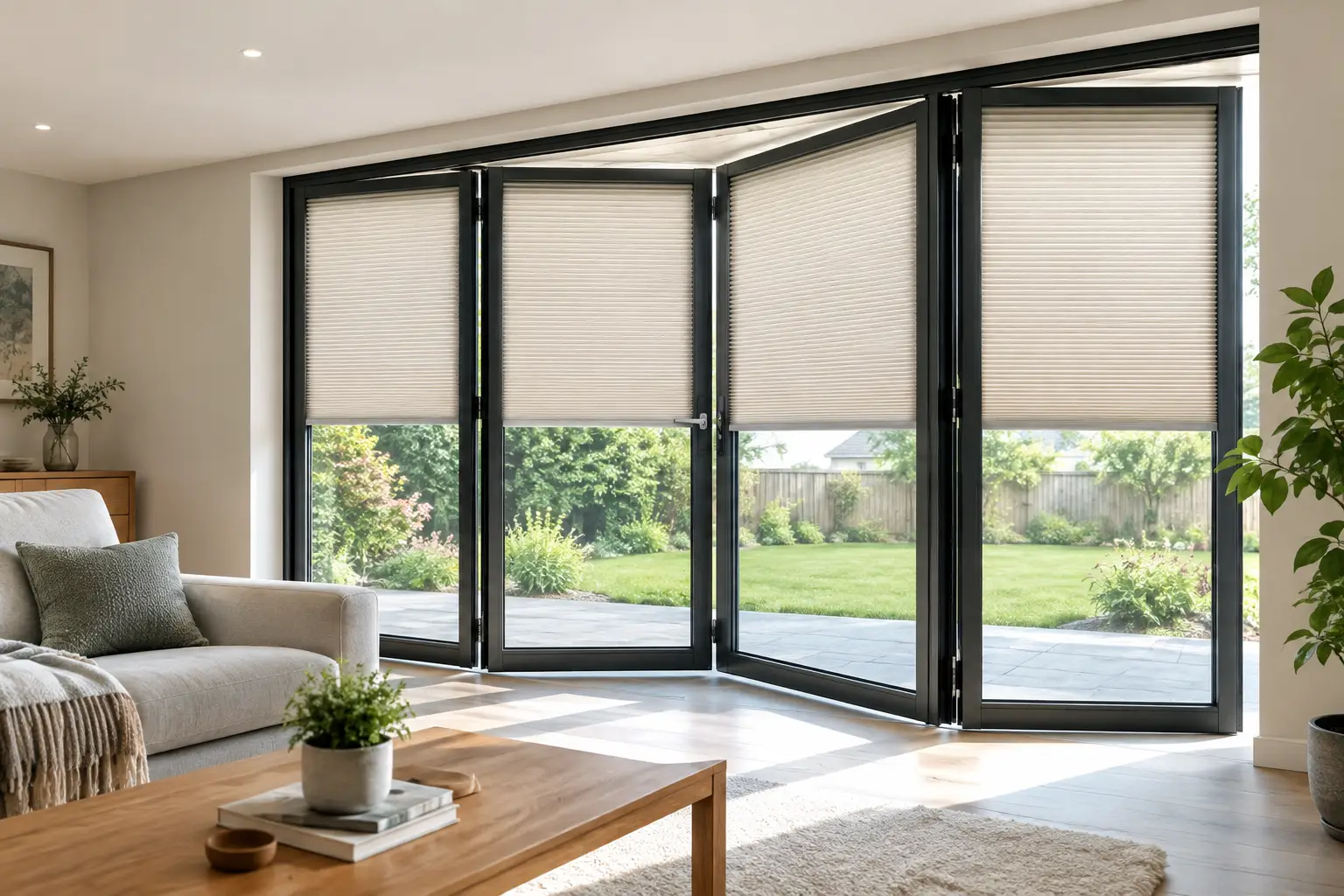
Bifold doors bring generous light, garden views and a lovely sense of openness to a room. They also make window dressing more considered than it is for a standard window. If you are asking what blinds work for bifolds, the best answer depends on how often the doors are used, where the blinds will sit and how much privacy or shading you need. The right choice should look beautifully proportioned when the doors are closed, while allowing the panels to fold and stack without fuss.
For most homes, made-to-measure blinds are the sensible starting point. Bifold openings are often wide, and even a small measuring or fitting compromise can affect the way the doors operate. A carefully planned treatment gives you practical control of sunlight and privacy without taking away from the clean, architectural look that made you choose bifolds in the first place.
What blinds work for bifolds doors?
There is no single blind that suits every bifold door. Some homeowners want a soft layer that reduces glare at a south-facing kitchen extension. Others need straightforward privacy in an overlooked dining room, or a solution that can remain in place while children and pets move in and out to the garden.
The main decision is whether to fit blinds above the opening or to each individual door panel. Blinds fitted above the opening usually draw aside as one treatment and leave the doors clear when open. Blinds fixed to the individual panels move with the doors, so they remain in position when a door is opened. Both approaches can work well when designed around the room and the way you live in it.
Perfect Fit and INTU-style blinds
Perfect Fit and INTU-style systems are among the most practical choices for bifold doors with suitable glazed frames. The blind is fitted neatly within the door frame rather than drilled into it, creating a tidy finish with no loose cords or swinging fabric. Because it moves with the door, you can open an individual panel without raising the blind first.
Pleated and cellular fabrics are particularly popular in these systems. They have a slim profile, which helps keep the doors looking light, and they can be positioned to cover the lower or upper part of the glass as needed. This is useful where you want privacy from neighbouring properties while retaining daylight overhead.
Cellular fabrics also offer an extra insulating layer. Although bifold doors are usually well glazed, large expanses of glass can still feel cool on winter evenings or gather heat in summer. A honeycomb construction helps soften this effect, while offering a gentle, contemporary appearance.
The trade-off is that these blinds are designed around the dimensions and bead detail of the individual doors. They need accurate assessment before ordering, and not every door system is compatible. A professional survey avoids a solution that catches on handles, clashes with hinges or prevents the doors from folding fully.
Roller blinds for a clean, modern finish
Roller blinds can be an excellent option when fitted above the bifold opening, particularly in kitchens, garden rooms and contemporary extensions. They give a simple, uncluttered line and are available in a wide range of textures, colours and performance fabrics.
A screen fabric reduces glare and filters bright sunlight while maintaining some connection with the view outside during daylight hours. A dim-out or blackout fabric is better suited to a room where stronger light control is wanted, though it will naturally block the view when lowered. For a west-facing room, where afternoon sun can make a dining area uncomfortable, this can be a welcome benefit.
The important consideration is stacking space. A roller blind above the doors must be mounted high enough for the fabric and bottom bar to clear the opening when raised. On a very wide run of bifolds, separate rollers may be more manageable than one exceptionally wide blind. This also lets you shade one part of the opening while keeping another open to the garden.
Vertical blinds for wide openings
Vertical blinds remain a very capable choice for larger bifold spans. Their louvres rotate to adjust light and privacy, then draw neatly to one or both sides when you want the doors fully open. They are especially useful where the opening is too wide for a single practical roller blind, or where flexible day-to-day light control matters most.
Modern vertical blinds have moved well beyond the office-like styles some people remember. With carefully selected fabric, slim headrails and a considered colour palette, they can feel soft and at home in a family living space. Neutral woven fabrics work particularly well alongside natural timber, painted cabinetry and garden-facing glazing.
They do require room at the side of the opening for the louvres to stack. If the doors open against a wall, a kitchen unit or shelving, this needs planning. The blind should also be positioned so that the operating chain and louvres do not interfere with the folding doors.
Venetian blinds and door-mounted options
Aluminium Venetian blinds fitted to individual door panels provide precise control over light and privacy. Tilting the slats lets you direct sunlight away from a worktop or dining table without closing off the room entirely. Their streamlined look can suit modern bifolds, especially in a kitchen or utility area where an easy-clean finish is valued.
For a warmer look, some homeowners consider wood-effect Venetians. These can be attractive, but their weight and depth must be right for the door frame and opening action. On bifolds that are used frequently, a lighter, purpose-designed system is often more practical. Real wood is also less suitable where moisture, steam or strong temperature changes are likely.
As with pleated systems, a door-mounted Venetian must allow for handles, hinges and the folding movement of every panel. It is not a case of choosing a blind simply because it fits the glass size. The fitting details matter just as much.
Choosing blinds for bifolds room by room
The room often points you towards the right answer. In a kitchen-diner, roller or vertical blinds can offer broad coverage and straightforward cleaning, while screen fabrics manage glare without making the space feel shut away. In a lounge, pleated or cellular blinds on each panel provide softer light and a more intimate feel after dark.
For a bedroom with bifold doors, privacy and darkness may take priority. Blackout roller blinds above the opening can be effective, but be aware that small gaps around the sides are normal with most blind systems. If complete darkness is essential, the room may benefit from a combination of blinds and curtains, designed so neither treatment obstructs the doors.
A garden room usually calls for flexibility. Here, an individually fitted pleated blind lets you enjoy the doors open with the blind still in place, while a larger roller or vertical blind gives stronger solar control when the whole expanse of glass needs shading. The best option depends on whether you use the space chiefly in the daytime, for entertaining in the evening, or throughout the year.
Details that make the difference
Before selecting fabric or colour, consider the practical details that are easy to overlook. Check where the doors stack, the position of handles and whether there is enough frame for a fitted system. Think about which doors are used most often, particularly the traffic door that everyone uses to step outside. A blind that looks good but has to be raised every time that door is opened may quickly become frustrating.
Child safety is another consideration. Tensioned, cordless or carefully managed operating systems can be preferable in busy family homes. For sun-facing rooms, choose fabric according to the effect you want: screen fabrics soften glare, dim-out fabrics reduce brightness more substantially, and blackout fabrics offer the strongest coverage.
Colour should work with the view as well as the interior. Pale, neutral blinds tend to sit quietly against large glass areas and keep a room feeling open. A deeper tone can add welcome definition, particularly where the bifolds are framed in black, anthracite or rich timber. Sampling fabric in the actual room is worthwhile, as daylight changes significantly from morning to evening.
Why professional measuring matters with bifold blinds
Bifold doors leave little room for guesswork. The headroom above the opening, the clearance around the handles, the thickness of the door frame and the way the panels fold all influence what can be fitted successfully. Wide openings can also need specially considered support and fixing positions to keep the blind operating smoothly over time.
A home consultation gives you the chance to see fabrics against your own walls, flooring and furniture, rather than under showroom lighting. It also allows the fitter to identify whether each door panel can take a fitted blind, whether an above-opening solution will clear the doors, and how the finished treatment will look when the bifolds are both open and closed.
At Country Interiors, this careful approach is part of creating a finish that feels considered rather than added on. From measuring through to professional fitting, the aim is to make your bifold doors easy to use and a pleasure to live with.
The most successful bifold blinds are the ones that suit your daily routine as well as your décor. Start with how you use the doors, let the practical fittings guide the choice, and then enjoy selecting a fabric and finish that turns a bright glass opening into a truly settled part of your home.