
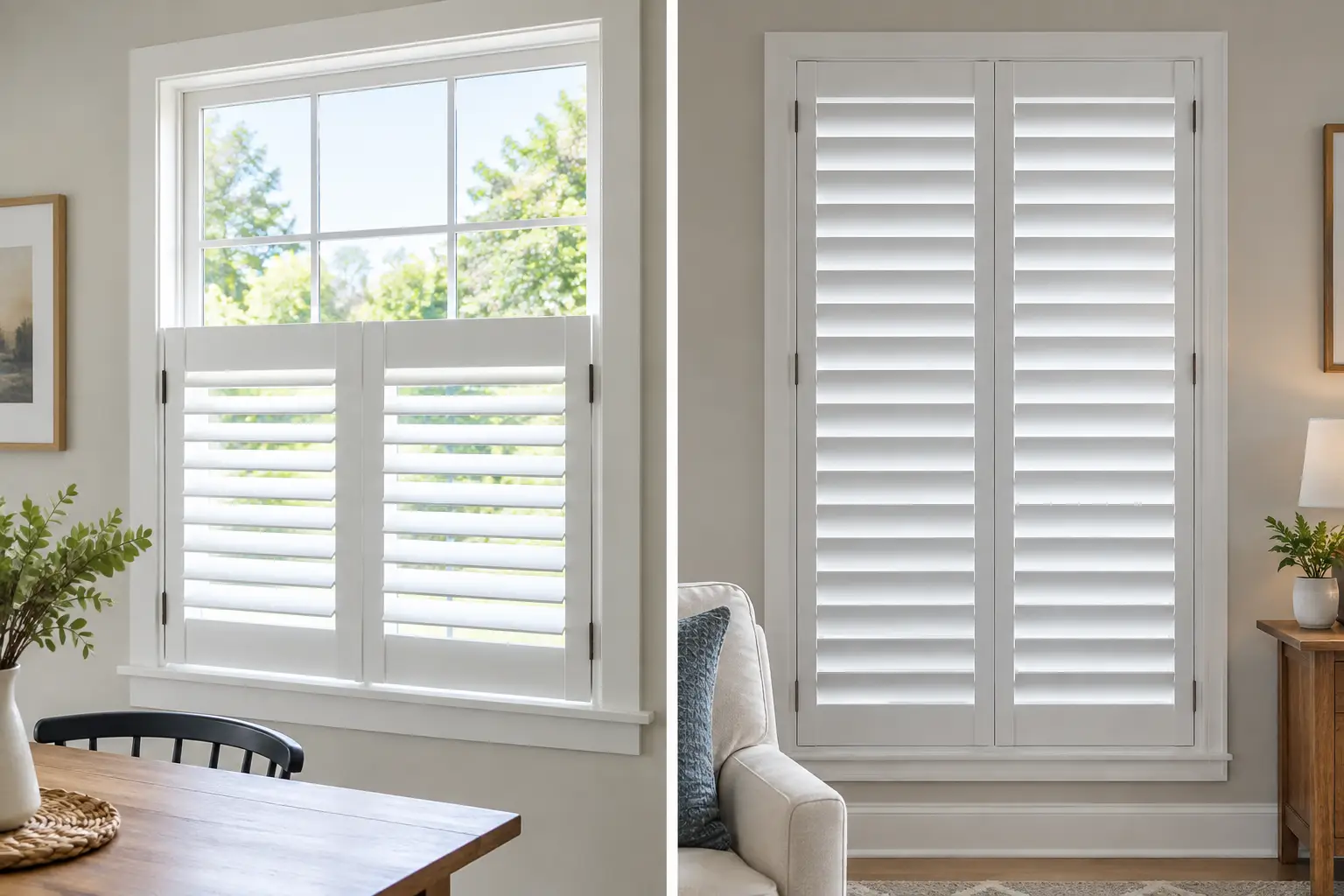
A front-facing sitting room can be difficult to get right. You may want to soften the view from the pavement without closing off the daylight that makes the room feel welcoming. That is where the choice between café shutters versus full shutters becomes far more than a matter of appearance. Both create a smart, tailored finish, but they work differently throughout the day and offer distinct benefits for privacy, warmth and light control.
The right choice depends on how you use the room, where the window sits and the balance you want between openness and seclusion. A carefully measured, professionally fitted shutter should feel like part of the architecture of your home, not an afterthought.
What are café shutters?
Café shutters cover the lower portion of a window, traditionally around the lower half, although the height can be tailored to suit the window and the level of privacy required. The top of the window is left uncovered, allowing light to pour in and preserving an open view of the sky, trees or garden.
They take their name from the shutters once seen in continental cafés, where the lower panels provided privacy for diners while the upper windows kept the interior bright. In a home, they bring the same relaxed but refined character to rooms that face a road or neighbouring properties.
Café shutters are especially popular in ground-floor bay windows, kitchens and dining spaces. They can make a street-facing room feel private without the heavier look of a fully covered window. Because the upper glass remains clear, they are a particularly appealing choice where natural light is precious.
What are full shutters?
Full-height shutters cover the entire window from top to bottom. They are made with panels and adjustable louvres, so you can tilt the louvres to direct light and limit overlooking, or open the panels fully when you want an unobstructed view.
This is the more enclosing option, but it does not have to make a room dark. When the louvres are angled upwards, daylight can still enter while the view into the room is restricted. Closed panels offer a more complete barrier at night too, which can be reassuring in bedrooms and rooms that face a busy road.
Full shutters suit almost every room, from a compact bathroom window to a large Victorian bay. Their clean lines work beautifully with both period features and more contemporary interiors, and their made-to-measure construction allows them to follow the shape and proportions of each window.
Café shutters versus full shutters: the everyday differences
The most noticeable difference is the amount of window left visible. Café shutters provide privacy where it is most often needed – at eye level – while retaining a clear upper window. Full shutters give you control across the whole opening.
For a room that is overlooked from the street but enjoys a pleasant outlook above head height, café shutters can be the perfect compromise. You can sit comfortably during the day without feeling on display, while still enjoying the changing light. They also offer a lovely opportunity to frame the upper part of the window with curtains, particularly in a sitting room where a softer, more layered look is desired.
Full shutters are generally the stronger choice when privacy needs change from day to night. In a bedroom, for example, café shutters leave the top half of the glass uncovered, which may not be suitable if there are nearby houses, streetlights or early morning sunshine. Full-height panels allow the entire window to be dressed, giving greater flexibility whenever you need it.
Light and outlook
Café shutters are often chosen for their lightness. They conceal the lower glass but do not interrupt the view upwards, so rooms can feel taller and more open. This makes them well suited to north-facing rooms or smaller spaces where every bit of daylight matters.
Full shutters offer more adjustment. Tilting the louvres gives you a gentle wash of light while reducing glare, and opening the panels brings the window back to its full potential. They may be preferable in a room used at different times of day, such as a home office that needs reduced screen glare in the afternoon and full daylight in the morning.
Privacy and security
Both styles offer useful daytime privacy. With café shutters, the lower section prevents passers-by from looking directly into the room, while the upper glazing stays open to the light. However, anyone positioned above the line of the shutters may still be able to see in. This matters in terraced homes, properties on a slope and rooms overlooked from an opposite first-floor window.
Full shutters give more complete coverage, particularly once evening arrives and interior lights are on. They can also add a reassuring visible layer at the window, although they should not be treated as a replacement for proper home security measures.
Insulation and comfort
A well-fitted shutter adds another layer at the window, helping to reduce the feeling of cold glass during the winter months. Full shutters cover more of the opening, so they usually provide greater potential for improving comfort and limiting draughts around the window area.
Café shutters still bring some benefit to the lower part of the window, but their main strengths are privacy, daylight and style. If warmth and full coverage are priorities in a particularly chilly room, full-height shutters may be more suitable. The condition of the window itself will always make a difference too.
Style and proportion
Café shutters have an informal elegance. They suit cottages, period terraces and characterful townhouses, yet can look equally at home in a modern kitchen. They work particularly well where you want the window treatment to feel present but not dominant.
Full shutters create a more structured, architectural effect. On tall sash windows, they can emphasise the height of the room. In a wide bay, they bring a sense of order and symmetry. The choice of louvre size, panel configuration and finish has a significant effect on the final look, so it is worth considering samples against your existing flooring, paint colours and furnishings.
Choosing the right shutters room by room
In a living room facing the street, café shutters often provide the balance homeowners are looking for. They maintain daylight and privacy while leaving space for curtains to add texture, colour and a more traditional sense of warmth. For a formal sitting room, that combination can feel especially inviting.
For bedrooms, full shutters are usually the more practical option. They offer better coverage from outside light and greater privacy in the evening. They can also create a calm, uncluttered finish that works well alongside curtains, or on their own if you prefer a simpler look.
Kitchens benefit from either style. Café shutters keep a busy family space bright and are easy to live with, especially on windows close to a dining table or overlooking a path. Full shutters can be ideal for larger kitchen windows or French doors, where you want the same controlled, cohesive finish across a wider area.
Bathrooms often call for full-height shutters, especially where the window is overlooked. Moisture-resistant shutter materials are an important consideration here, as are accurate measuring and fitting around tiles, recesses and opening windows.
Made-to-measure details make the difference
Whether you prefer café or full shutters, proportions matter. The chosen shutter height should sit naturally against the window design, often aligning with a rail, glazing bar or other existing architectural feature. A café shutter that stops at an arbitrary point can look awkward, while one that follows the window’s lines looks considered and established.
Accurate measuring is equally important for full shutters. Bay windows, uneven older walls, deep sills and handles all need to be allowed for before anything is made. Panel arrangement affects how the shutters fold back, how readily you can reach the window and whether the overall finish looks balanced.
This is why an in-home consultation is so valuable. It allows you to see colours and finishes in your own light, discuss how the room is used and make decisions with practical details in mind. At Country Interiors, professional measuring, advice and fitting are part of creating a finish that feels right from the first day and continues to serve your home well.
Café shutters may be the understated answer for a bright, overlooked room; full shutters may provide the adaptable coverage a bedroom or busy family home needs. Stand by the window at the times you use the room most, notice where the light falls and consider who can see in. Those small observations usually point clearly to the shutter style that will make your house feel more like home.